



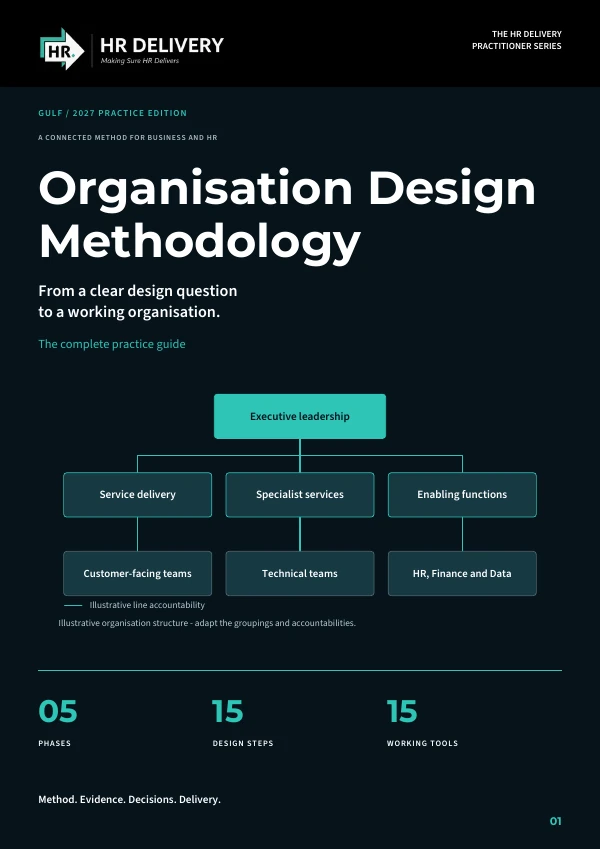
ابدأ بالمنهجية
منهجية التصميم التنظيمي
مسار واضح عبر خمس مراحل وخمسة عشر قراراً مترابطاً، مع أنشطة عملية ومخرجات متوقعة وتطبيقات توضيحية وورقة عمل لكل خطوة.
اقرأ المستندالمنهجية الكاملة
ابدأ بالمنهجية، وتعمّق في كتاب الممارسة، وطبّق السياق الخليجي، واربط عمل الإنسان بالذكاء الاصطناعي. تدعم هذه المنظورات الأربعة المتكاملة المراحل الخمس والخطوات الخمس عشرة نفسها.
ابدأ بالمنهجية
مسار واضح عبر خمس مراحل وخمسة عشر قراراً مترابطاً، مع أنشطة عملية ومخرجات متوقعة وتطبيقات توضيحية وورقة عمل لكل خطوة.
اقرأ المستند
تعمّق في الممارسة
شروح تفصيلية ورسوم وحالات وسجلات عمل منظّمة حول الخطوات الخمس عشرة. استخدمه لدراسة القرار الذي أمامك وربط الأدلة والصلاحيات والأفراد والتنفيذ.
اقرأ المستند
طبّق السياق الخليجي
دليل عملي بصري للمنهجية والأدوات ومنظور كل دولة من دول الخليج الست. اربط خيارات التصميم بواقع جهة العمل والخدمة والقوى العاملة وصلاحيات القرار، ثم اختبر النتيجة محلياً.
اقرأ المستند
صمّم عمل الإنسان والذكاء الاصطناعي
مرجع موسّع للممارسين في النظرية التنظيمية والقيادة والثقافة ونماذج التشغيل والاستخدام المسؤول للذكاء الاصطناعي. تربط الحالات التعليمية والأدلة القطرية وخمسة عشر نموذجاً التقنيات الجديدة بالمسؤولية البشرية والنتائج القابلة للقياس.
اقرأ المستندتحدد المنهجية المسار، ويوضح كتاب الممارسة كيفية إنجاز العمل. استخدم الدليل لاختبار الملاءمة المحلية ومرجع الذكاء الاصطناعي عندما تغيّر التقنية العمل أو القرارات أو المساءلة. عُد إلى الكتب كلما تطورت الأدلة.
اتفق على المهمة وترجم الاستراتيجية إلى متطلبات التصميم.
افهم العمل الحالي واختبر الأدلة وحدد المبادئ والقدرات.
اربط نموذج التشغيل والهيكل والمقاييس ومسؤوليات الإنسان والذكاء الاصطناعي.
اجمع الانتقال والآثار والتكاليف والأدوار التفصيلية في مقترح متفق عليه.
خطط للتنفيذ وادعم الانتقال وقيّم النتائج وحسّن الأداء.
اكتشف · شخّص · صمّم · وائم · نفّذ
شاهد الخطوات الخمس عشرة كاملة. اختر مرحلة ثم اعرض الخطوات والأدلة أو وثائق المدخلات أو الأدوات والبوابات أو وثائق المخرجات.
اعمل استناداً إلى الأدلة. راجع مرحلة سابقة عندما تتغيّر الافتراضات أو الأولويات أو سياق العمل.
دراسة حالة ناماريس الكاملة
ابدأ بملخص، أو استكشف سجلات الحالة الكاملة، أو اختر خطوة منفردة أدناه. ناماريس دراسة حالة افتراضية.
المرحلة 1 / اكتشف
Commission the work, clarify the strategic purpose and involve the people who can define a credible mandate. Agree scope, decision authority and evidence questions before changing the chart.
An agreed mandate, scope, strategic purpose and evidence plan.
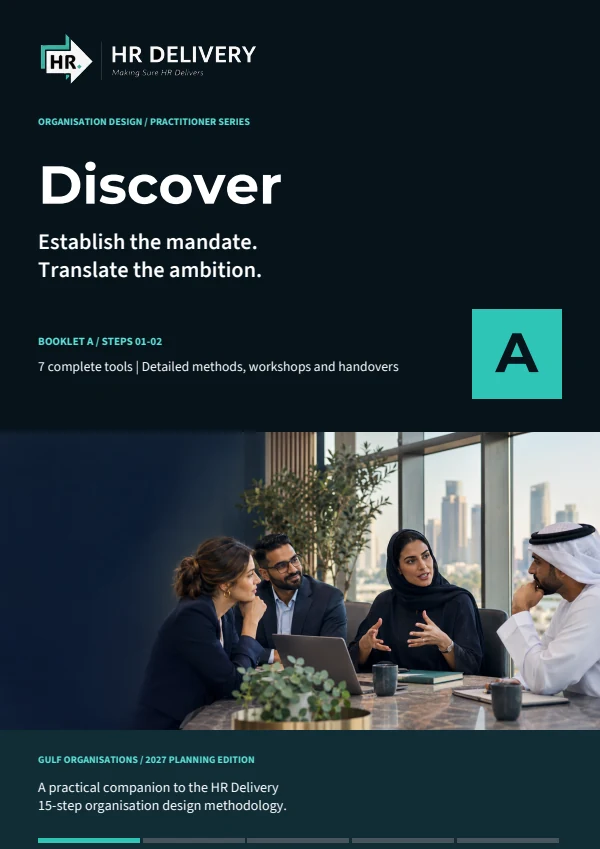
Commission the work, clarify the strategic purpose and involve the people who can define a credible mandate. Agree scope, decision authority and evidence questions before changing the chart.
اقرأ المستند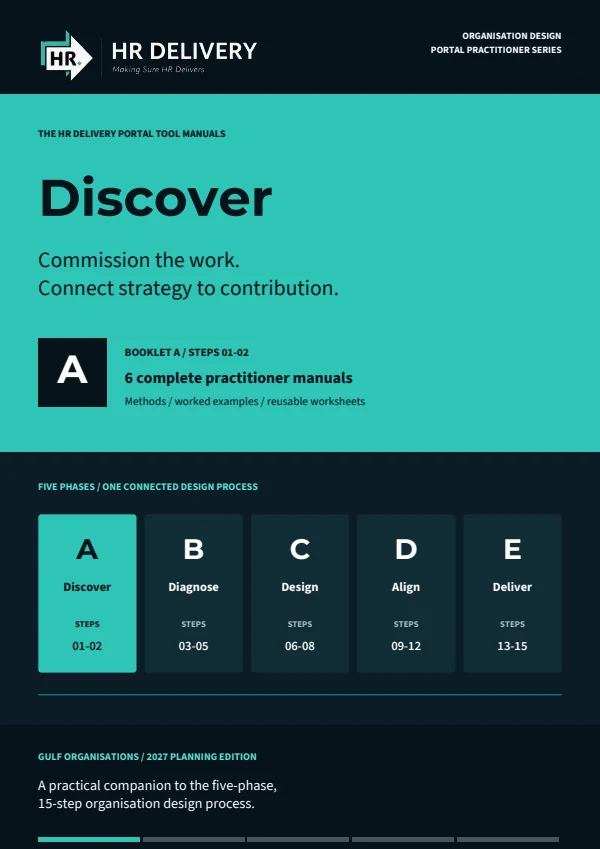
Practical manuals for the HR Delivery portals used in Discover, with methods, worked examples and reusable worksheets.
اقرأ المستنداستعد لكل خطوة: استخدم وثيقة مدخلاتها لتحديد المعلومات والأدلة المطلوب جمعها قبل بدء العمل.
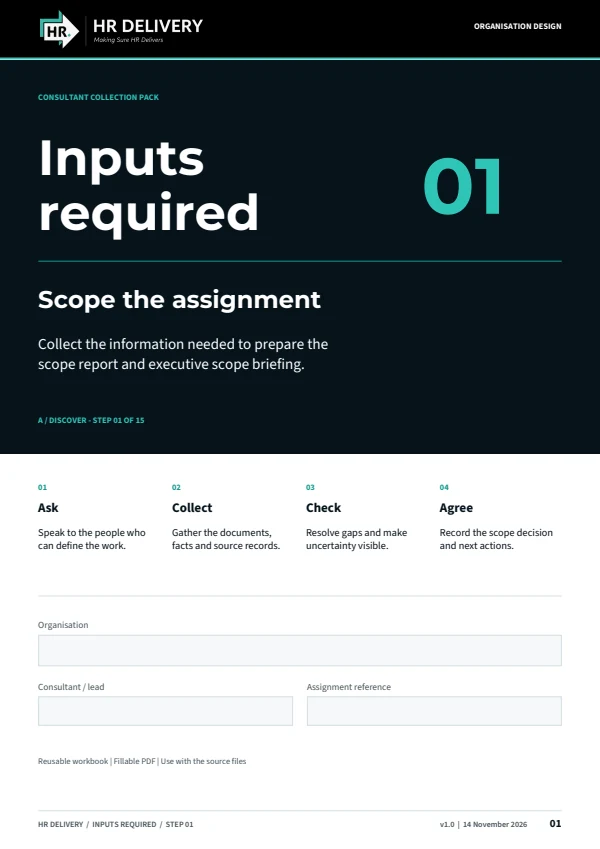
الخطوة 01
اجمع المعلومات اللازمة لإعداد تقرير نطاق المهمة والإحاطة التنفيذية بشأن النطاق.
اقرأ وثيقة المدخلات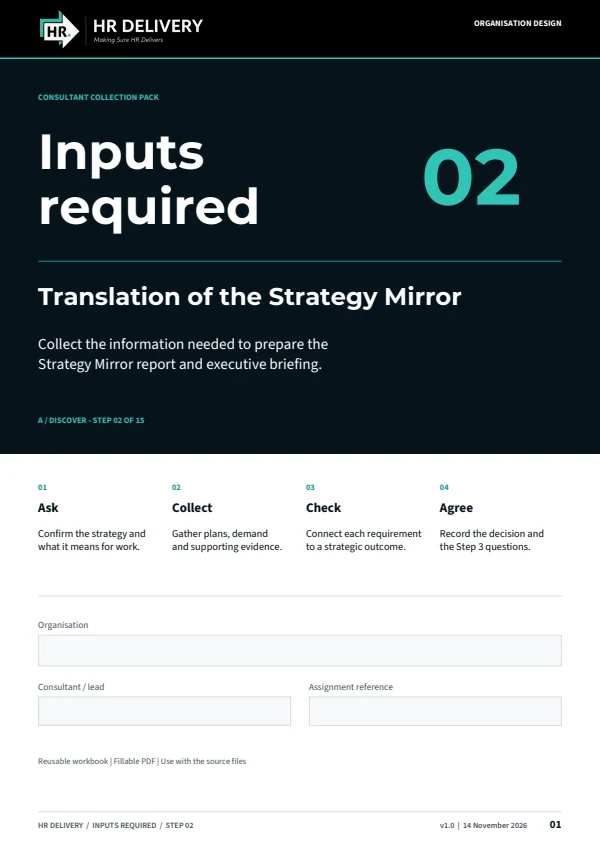
الخطوة 02
اجمع المعلومات اللازمة لإعداد تقرير مرآة الاستراتيجية والإحاطة التنفيذية.
اقرأ وثيقة المدخلاتموارد للاتفاق على المهمة وترجمة الأولويات الاستراتيجية إلى المساهمات المطلوبة. اختر الأدوات التي تحتاجها مهمتك؛ وتظل صلاحيات البوابات الحالية مطبّقة.
التقارير التي توثّق العمل المنجز في هذه المرحلة.
الخطوة 01 · اكتشف
الاتفاق على الغاية والحدود والمسؤوليات والقرارات التي توجّه المهمة.
الإنجليزية · للعرض فقط
ناماريس · حالة افتراضية
الخطوة 02 · اكتشف
ترجمة التوجه الاستراتيجي إلى متطلبات واضحة للتصميم التنظيمي.
الإنجليزية · للعرض فقط
ناماريس · حالة افتراضية
تتفعّل روابط القراءة عند رفع الملفات.
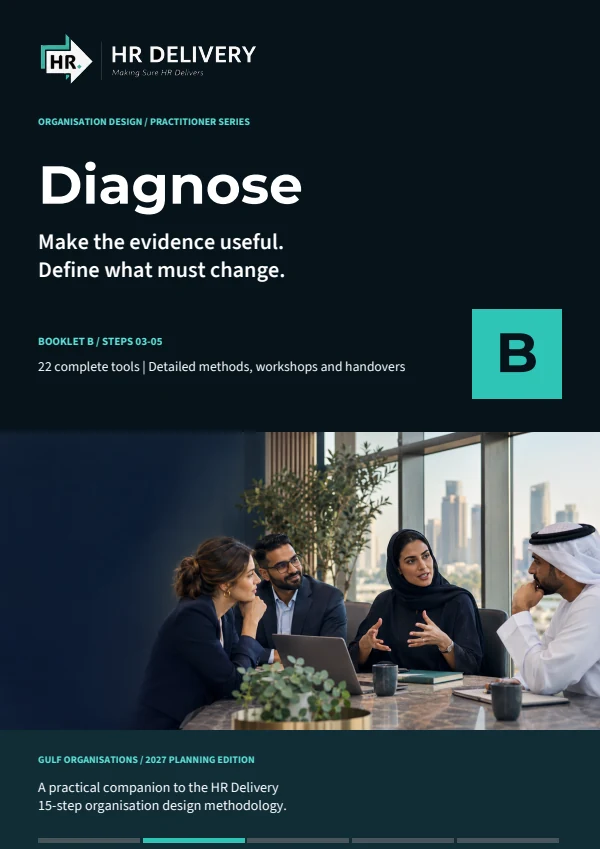
المرحلة 2 / شخّص
Establish a current-performance baseline, investigate how work and authority operate, agree design principles and define the capabilities the future organisation needs.
An evidence-based account of the work, the problems and the design requirements.
Establish a current-performance baseline, investigate how work and authority operate, agree design principles and define the capabilities the future organisation needs.
اقرأ المستند
Practical manuals for the HR Delivery portals used in Diagnose, with methods, worked examples and reusable worksheets.
اقرأ المستنداستعد لكل خطوة: استخدم وثيقة مدخلاتها لتحديد المعلومات والأدلة المطلوب جمعها قبل بدء العمل.
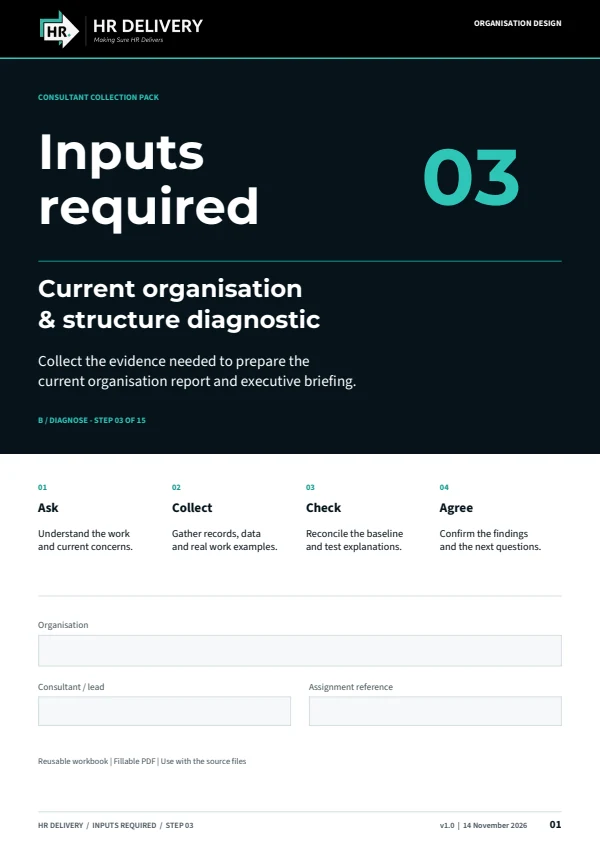
الخطوة 03
اجمع الأدلة اللازمة لإعداد تقرير المؤسسة الحالية والإحاطة التنفيذية.
اقرأ وثيقة المدخلات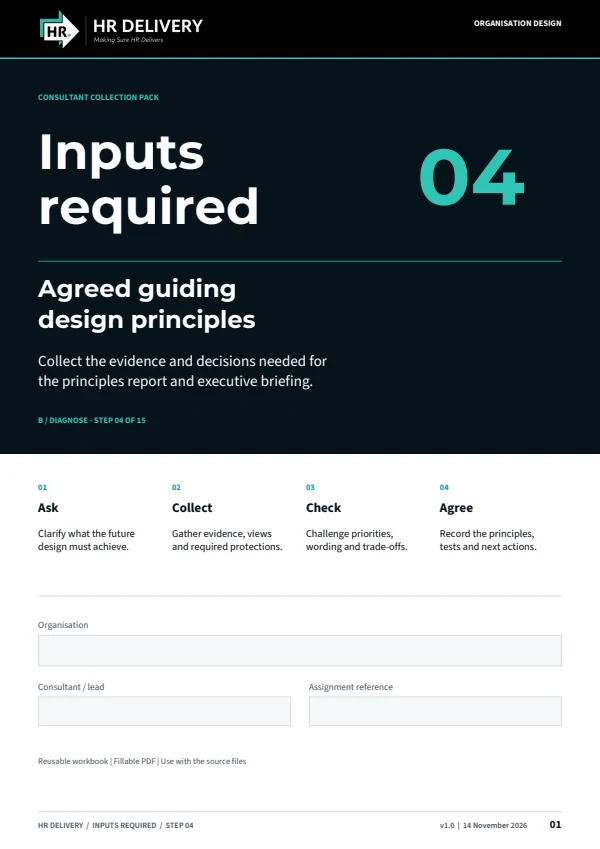
الخطوة 04
اجمع الأدلة والقرارات اللازمة لتقرير المبادئ والإحاطة التنفيذية.
اقرأ وثيقة المدخلات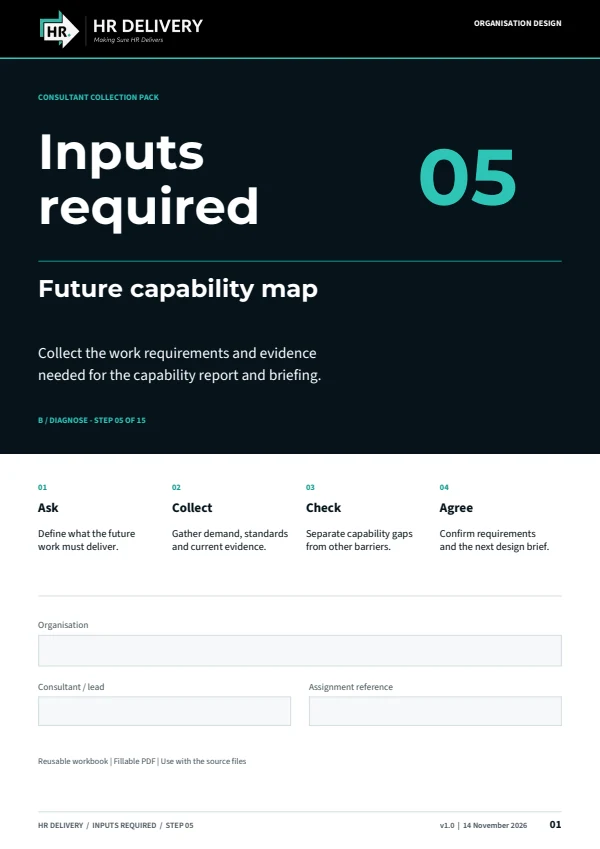
الخطوة 05
اجمع متطلبات العمل والأدلة اللازمة لتقرير القدرات والإحاطة.
اقرأ وثيقة المدخلاتموارد لأدلة الوضع الحالي ومبادئ التصميم المتفق عليها وخريطة القدرات المستقبلية. اختر الأدوات التي تحتاجها مهمتك؛ وتظل صلاحيات البوابات الحالية مطبّقة.
التقارير التي توثّق العمل المنجز في هذه المرحلة.
الخطوة 03 · شخّص
جمع الأدلة حول المؤسسة الحالية وأدائها وتحديات تصميمها.
الإنجليزية · للعرض فقط
ناماريس · حالة افتراضية
الخطوة 04 · شخّص
توثيق المبادئ التوجيهية المتفق عليها والأدلة ومبررات اختيارها.
الإنجليزية · للعرض فقط
ناماريس · حالة افتراضية
الخطوة 05 · شخّص
توضيح القدرات المطلوبة للمؤسسة المستقبلية ومجالات تطويرها.
الإنجليزية · للعرض فقط
ناماريس · حالة افتراضية
تتفعّل روابط القراءة عند رفع الملفات.
المرحلة 3 / صمّم
Develop operating-model and structural alternatives, clarify accountabilities and test how work will connect. Define the measures and rules that make each option workable.
Configured structural options, roles, accountabilities and an explicit comparison.
Develop operating-model and structural alternatives, clarify accountabilities and test how work will connect. Define the measures and rules that make each option workable.
اقرأ المستند
Practical manuals for the HR Delivery portals used in Design, with methods, worked examples and reusable worksheets.
اقرأ المستنداستعد لكل خطوة: استخدم وثيقة مدخلاتها لتحديد المعلومات والأدلة المطلوب جمعها قبل بدء العمل.
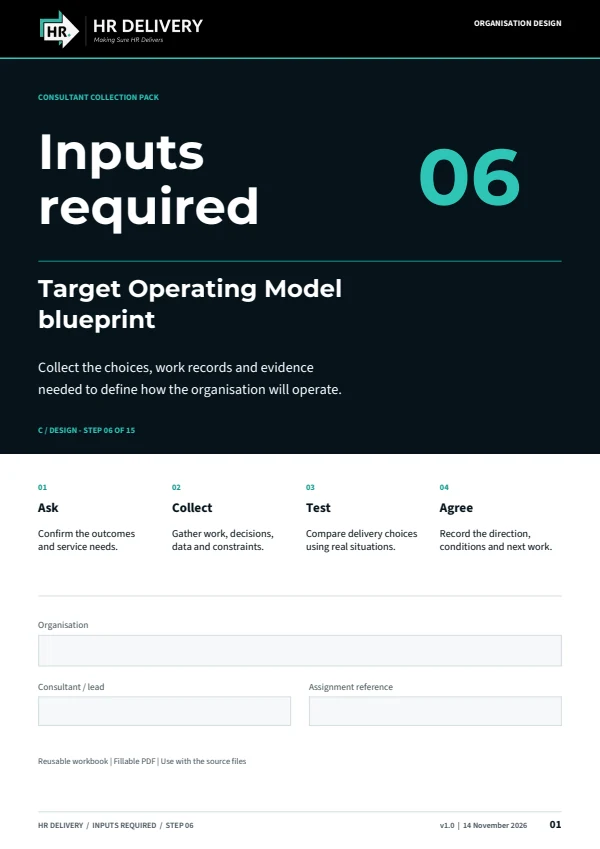
الخطوة 06
اجمع الخيارات وسجلات العمل والأدلة اللازمة لتحديد كيفية عمل المؤسسة.
اقرأ وثيقة المدخلات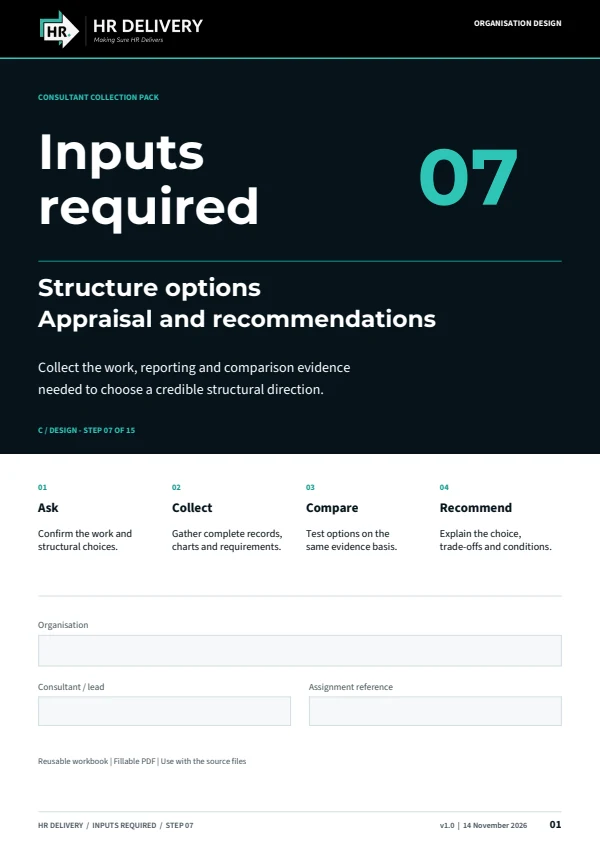
الخطوة 07
اجمع أدلة العمل وخطوط التقارير والمقارنة اللازمة لاختيار توجه هيكلي موثوق.
اقرأ وثيقة المدخلات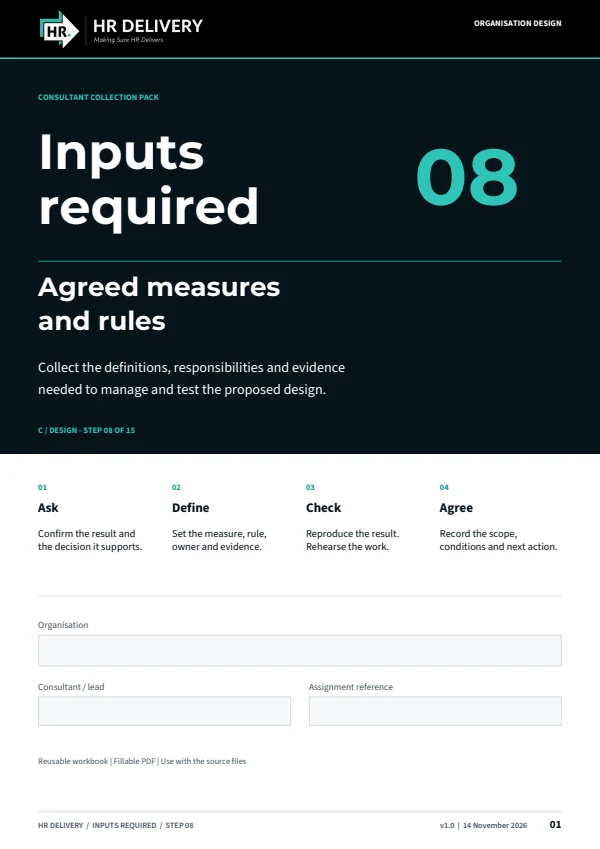
الخطوة 08
اجمع التعريفات والمسؤوليات والأدلة اللازمة لإدارة التصميم المقترح واختباره.
اقرأ وثيقة المدخلاتموارد لتطوير نموذج التشغيل ومقارنة البدائل الهيكلية وتحديد المقاييس والقواعد. اختر الأدوات التي تحتاجها مهمتك؛ وتظل صلاحيات البوابات الحالية مطبّقة.
التقارير التي توثّق العمل المنجز في هذه المرحلة.
الخطوة 06 · صمّم
توضيح كيفية ربط نموذج التشغيل المستقبلي بين العمل والأفراد والقرارات والتنفيذ.
الإنجليزية · للعرض فقط
ناماريس · حالة افتراضية
الخطوة 07 · صمّم
مقارنة البدائل الهيكلية العامة وشرح التصميم الموصى به.
الإنجليزية · للعرض فقط
ناماريس · حالة افتراضية
الخطوة 08 · صمّم
تحديد المقاييس وقواعد القرار وحدود العمل المتفق عليها للتصميم.
الإنجليزية · للعرض فقط
ناماريس · حالة افتراضية
تتفعّل روابط القراءة عند رفع الملفات.
المرحلة 4 / وائم
Choose the transition approach, assess impacts and build an evidenced business case. Complete the roles, authority, workforce and employment arrangements needed for approval.
An agreed choice, business case, decision record and implementation commitment.

Choose the transition approach, assess impacts and build an evidenced business case. Complete the roles, authority, workforce and employment arrangements needed for approval.
اقرأ المستند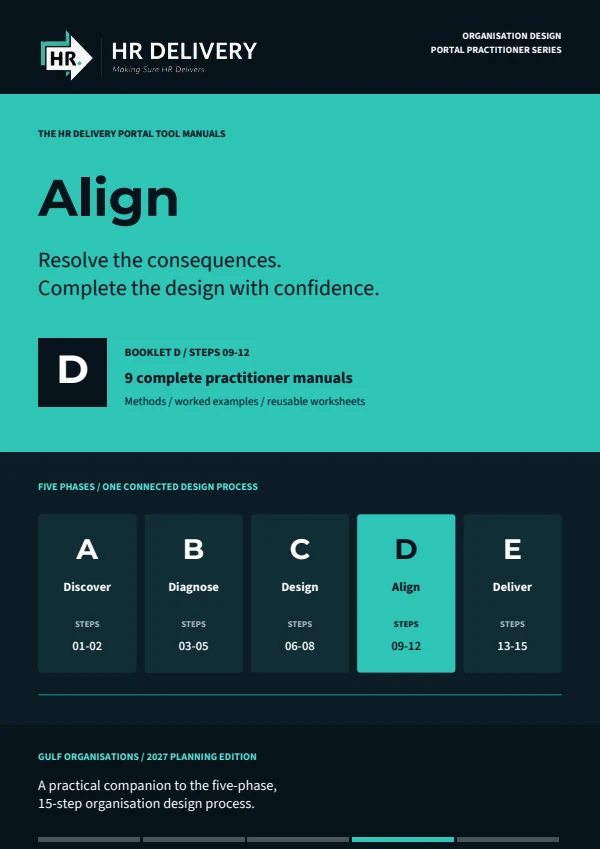
Practical manuals for the HR Delivery portals used in Align, with methods, worked examples and reusable worksheets.
اقرأ المستنداستعد لكل خطوة: استخدم وثيقة مدخلاتها لتحديد المعلومات والأدلة المطلوب جمعها قبل بدء العمل.
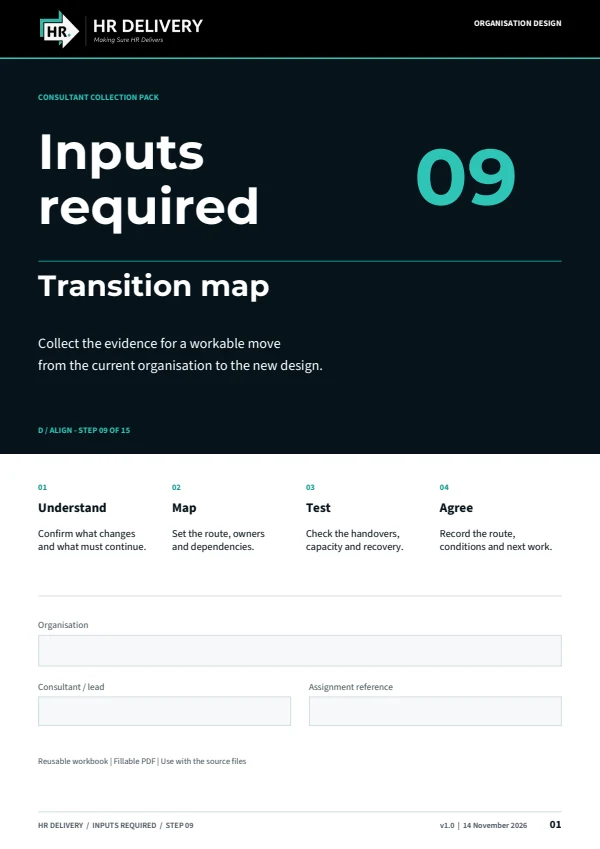
الخطوة 09
اجمع الأدلة اللازمة لانتقال قابل للتنفيذ من المؤسسة الحالية إلى التصميم الجديد.
اقرأ وثيقة المدخلات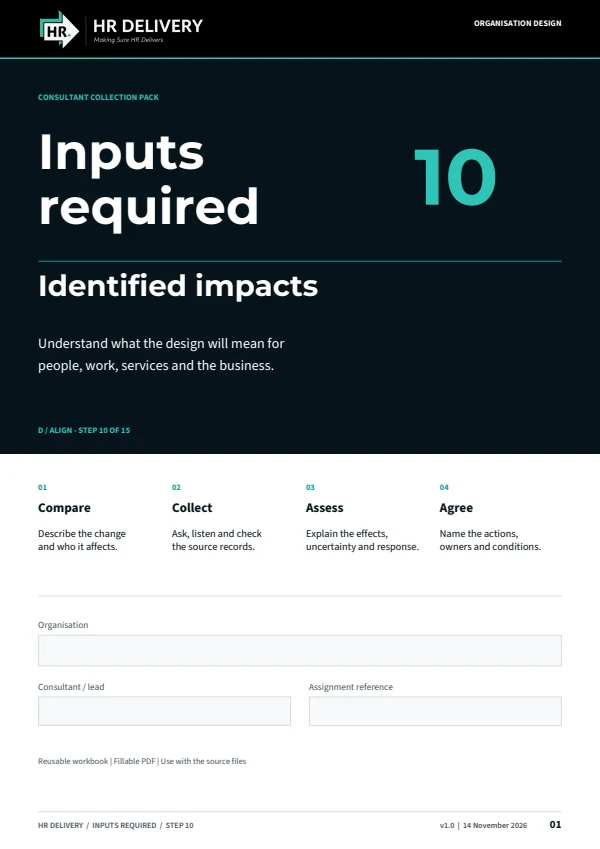
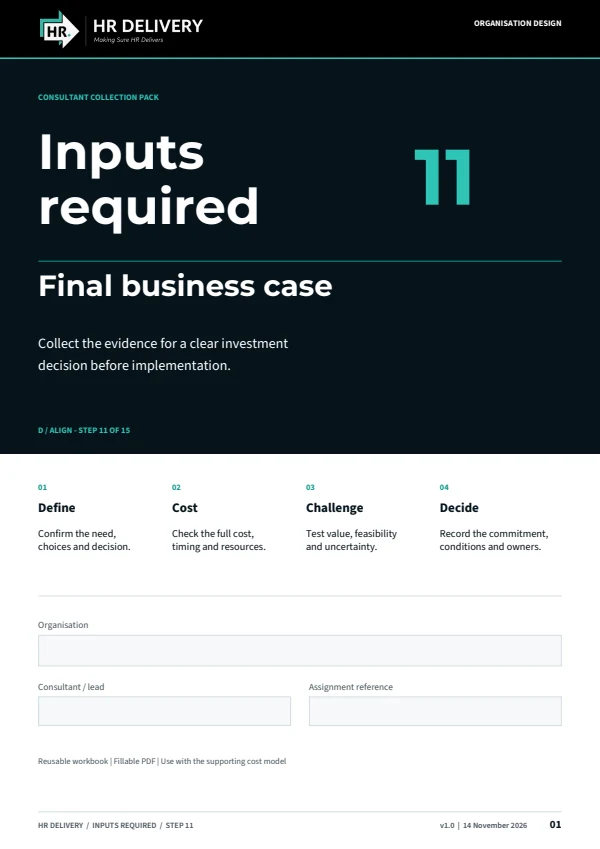
الخطوة 11
اجمع الأدلة اللازمة لاتخاذ قرار استثماري واضح قبل التنفيذ.
اقرأ وثيقة المدخلات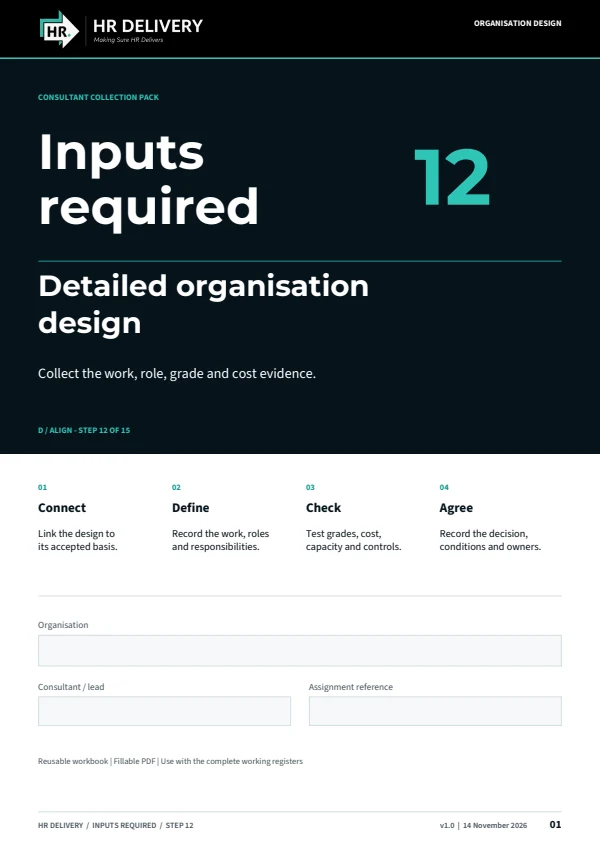
الخطوة 12
اجمع الأدلة المتعلقة بالعمل والأدوار والدرجات والتكاليف.
اقرأ وثيقة المدخلاتموارد لخريطة الانتقال وتقييم الآثار ودراسة الجدوى والتصميم التنظيمي التفصيلي. اختر الأدوات التي تحتاجها مهمتك؛ وتظل صلاحيات البوابات الحالية مطبّقة.
التقارير التي توثّق العمل المنجز في هذه المرحلة.
الخطوة 09 · وائم
رسم مسار الانتقال من المؤسسة الحالية إلى التصميم المستقبلي المتفق عليه.
الإنجليزية · للعرض فقط
ناماريس · حالة افتراضية
الخطوة 10 · وائم
توضيح الآثار المتوقعة على الأفراد والعمليات والمؤسسة لمراجعتها.
الإنجليزية · للعرض فقط
ناماريس · حالة افتراضية
الخطوة 11 · وائم
جمع الأدلة والقيمة والتكاليف والمخاطر والتوصيات للحصول على الموافقة على التنفيذ.
الإنجليزية · للعرض فقط
ناماريس · حالة افتراضية
الخطوة 12 · وائم
تحديد المؤسسة التفصيلية والأدوار والدرجات والاحتياجات المتفق عليها لأعداد الموظفين.
تتفعّل روابط القراءة عند رفع الملفات.
المرحلة 5 / نفّذ
Plan implementation, prove readiness and manage the transition. Compare outcomes with the baseline and business case, resolve gaps and assign ongoing ownership.
A managed transition, operating measures and a practical review of the design.
Plan implementation, prove readiness and manage the transition. Compare outcomes with the baseline and business case, resolve gaps and assign ongoing ownership.
اقرأ المستند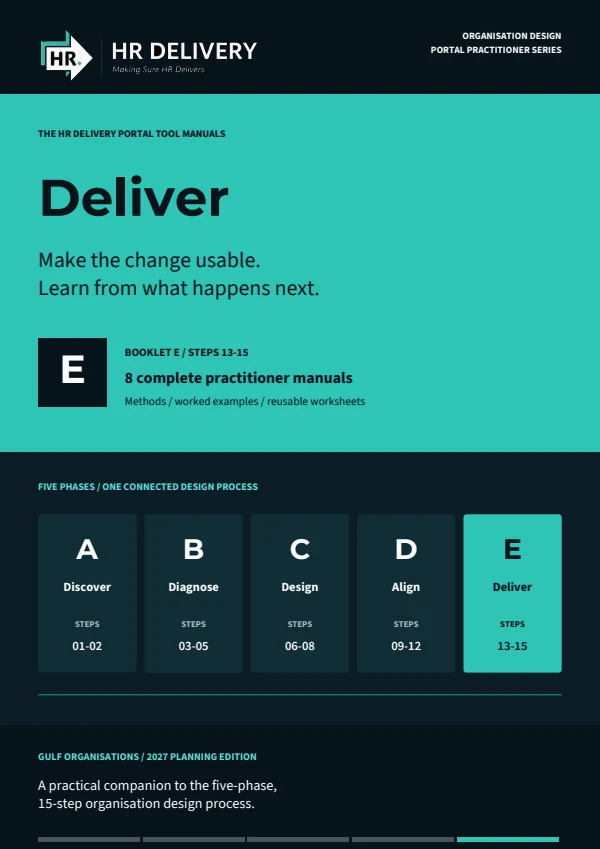
Practical manuals for the HR Delivery portals used in Deliver, with methods, worked examples and reusable worksheets.
اقرأ المستنداستعد لكل خطوة: استخدم وثيقة مدخلاتها لتحديد المعلومات والأدلة المطلوب جمعها قبل بدء العمل.
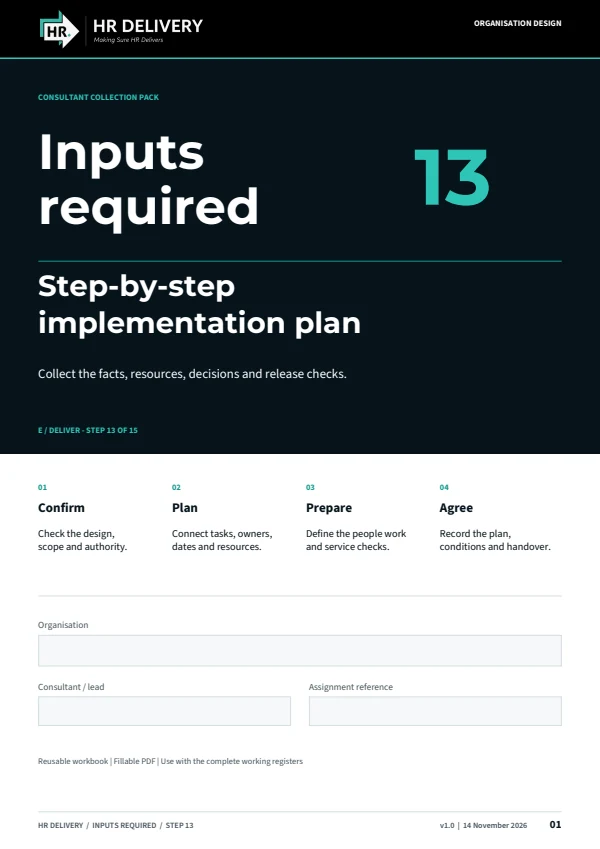
الخطوة 13
اجمع الحقائق والموارد والقرارات وفحوصات الجاهزية للإطلاق.
اقرأ وثيقة المدخلات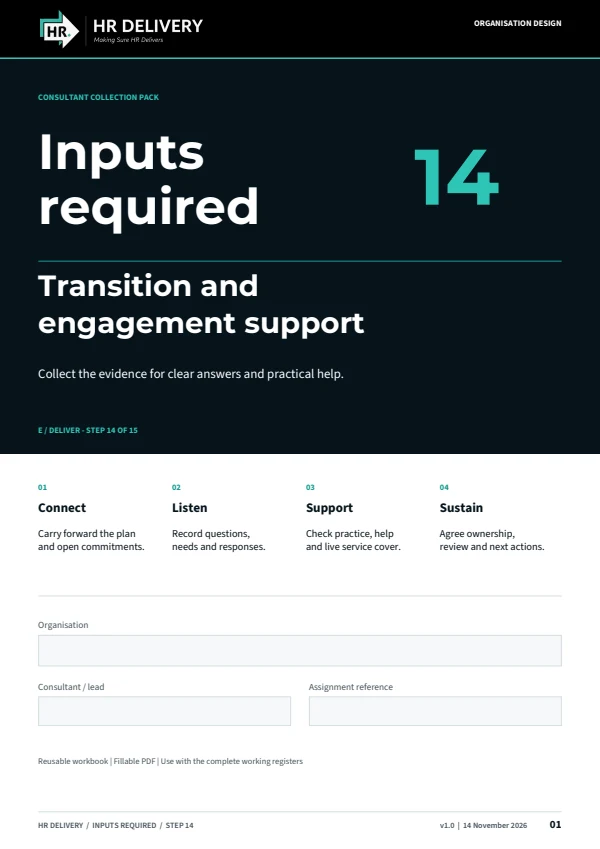
الخطوة 14
اجمع الأدلة اللازمة لتقديم إجابات واضحة ومساعدة عملية.
اقرأ وثيقة المدخلات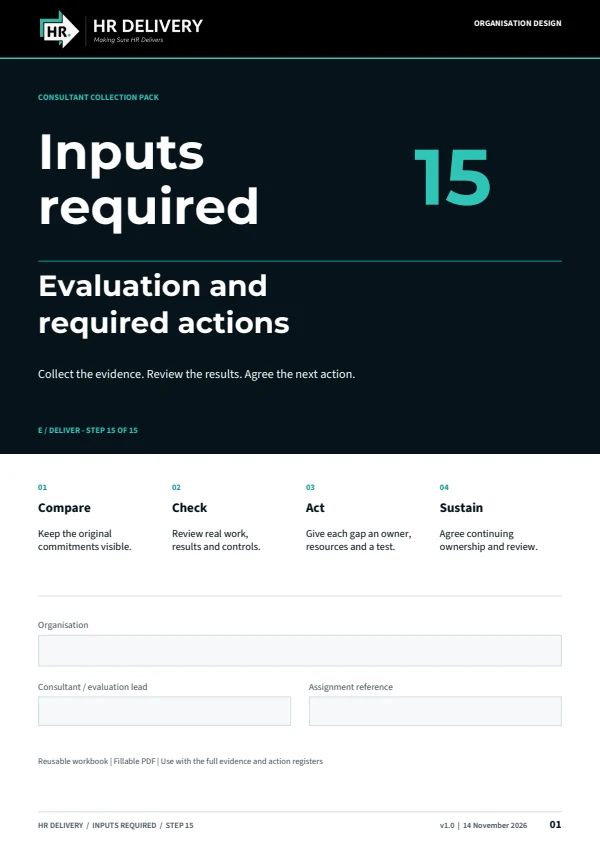
الخطوة 15
اجمع الأدلة وراجع النتائج واتفق على الإجراء التالي.
اقرأ وثيقة المدخلاتموارد لتنفيذ التصميم المعتمد ودعم الانتقال والتحقق من النتائج. اختر الأدوات التي تحتاجها مهمتك؛ وتظل صلاحيات البوابات الحالية مطبّقة.
اختر دولة خليجية واتّبع ست مراحل تضم 18 خطوة عملية وأدوات مساندة ونماذج خاصة بالدولة.
التقارير التي توثّق العمل المنجز في هذه المرحلة.
الخطوة 13 · نفّذ
ترتيب أنشطة التنفيذ والمسؤوليات والمعالم وفحوص الجاهزية.
الخطوة 14 · نفّذ
تحديد التواصل والمشاركة والدعم العملي المطلوب خلال الانتقال.
الإنجليزية · للعرض فقط
ناماريس · حالة افتراضية
الخطوة 15 · نفّذ
مراجعة ترسّخ التصميم الجديد وتقييم النتائج والاتفاق على الإجراءات المطلوبة.
تتفعّل روابط القراءة عند رفع الملفات.
حدّد معايير التصميم
استخدم كتاب المبادئ والتشخيص معاً. افحص الضغوط الحالية والتحديات المستقبلية، وراجع الأدلة الداعمة، ثم اتفق على قائمة مبادئ يراجعها المختصون لتوجيه التصميم.
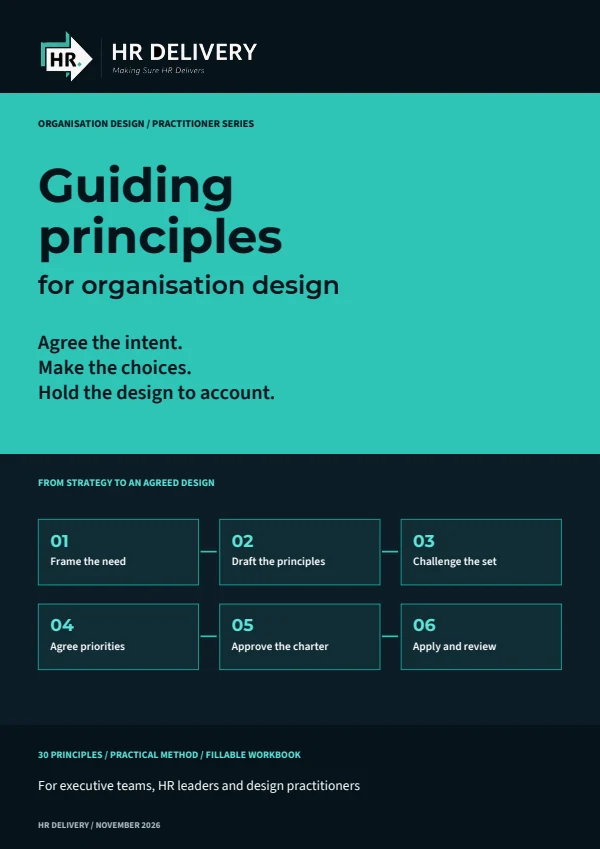
دليل الممارس
Explore 30 principles and a practical six-part method: frame the need, draft principles, challenge the set, agree priorities, approve the charter, and apply and review.
تشخيص المبادئ التوجيهية
أجب عن ٦٠ سؤالاً بمراسي محدّدة تغطي ٣٠ مبدأ. قارن الضغوط الحالية والتحديات المستقبلية وافحص التعادل والحساسية وسجّل حكمك المهني.
أداة تجريبية لدعم القرار، وليست تقييماً معتمداً أو توصية تلقائية بالتصميم. نموذج التشخيص المقدّم باللغة الإنجليزية.
افتح التشخيص ↗استكشف قبل الاختيار
استكشف كيف يجمع كل نمط العمل ويوزّع الصلاحيات وينشئ مفاضلات. قارن حتى أربعة تصاميم جنباً إلى جنب، وحدّد قائمة للدراسة ثم اختبر البدائل المهيّأة في أداة التقييم.
أضف من هيكلين إلى أربعة للمقارنة، ثم افتح تقرير البدائل الهيكلية للعرض فقط. يتضمن جدولاً بعشرة معايير ونقاط القوة والتعقيدات وظروف عدم الملاءمة ومراجع المصادر. التقرير باللغة الإنجليزية وفق الكتيّبات الأصلية.
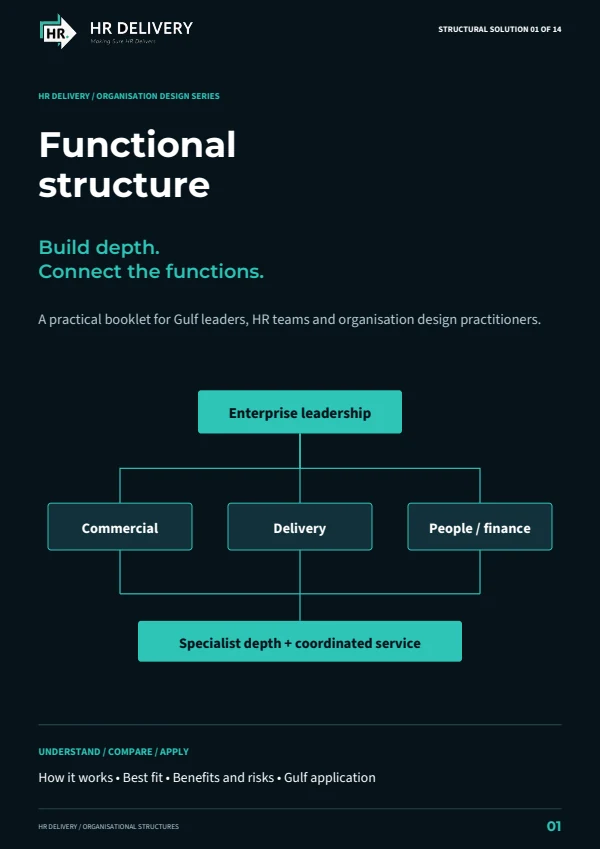
النمط الهيكلي 01 / 14
Professional function or discipline, such as operations, commercial, people and finance.
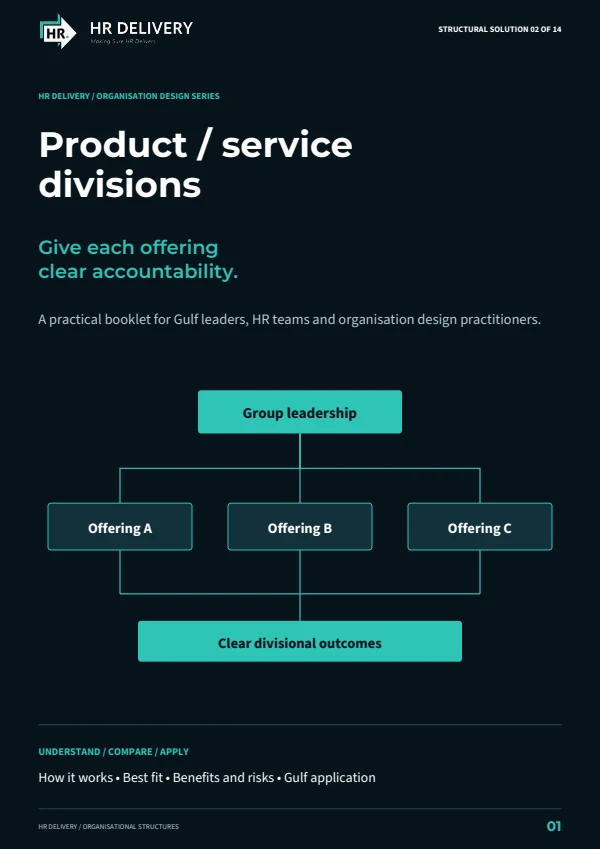
النمط الهيكلي 02 / 14
Distinct products or services with different economics, workflows or customer promises.
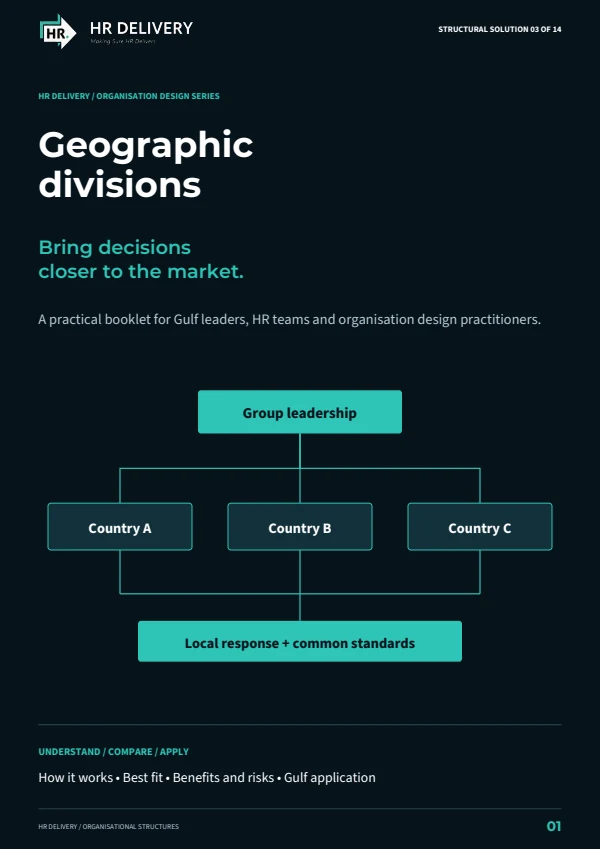
النمط الهيكلي 03 / 14
Territory, country or region where local conditions materially affect delivery.
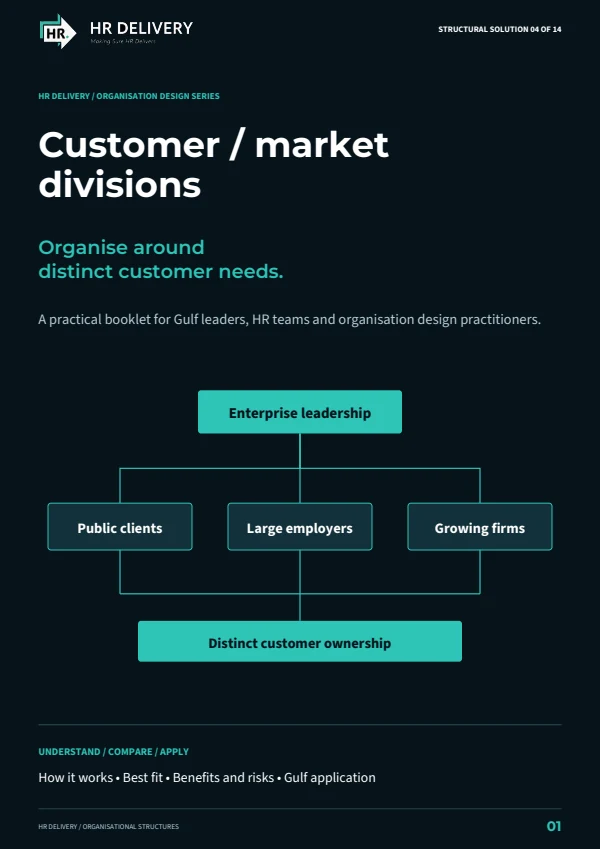
النمط الهيكلي 04 / 14
Customer segments or markets distinguished by substantive needs and service journeys.
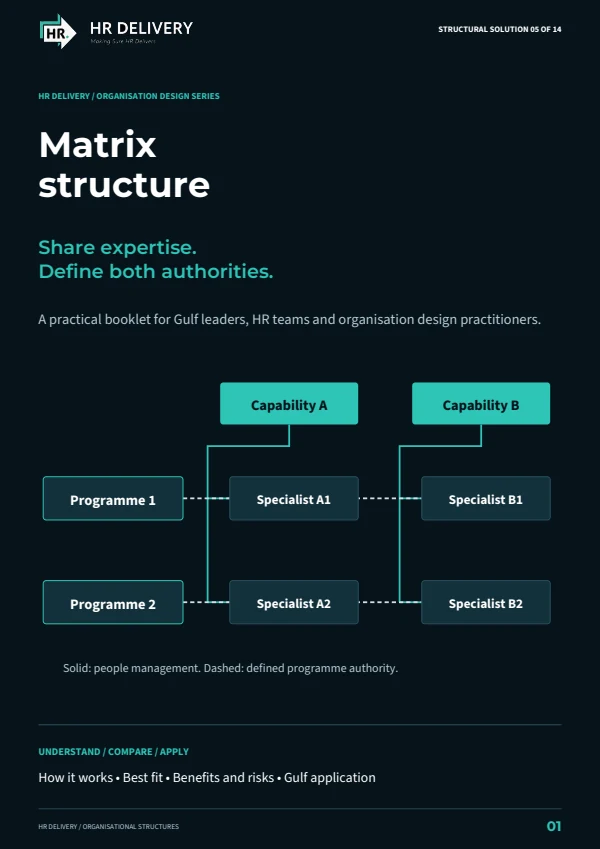
النمط الهيكلي 05 / 14
Two simultaneous organising dimensions with explicitly divided authority.
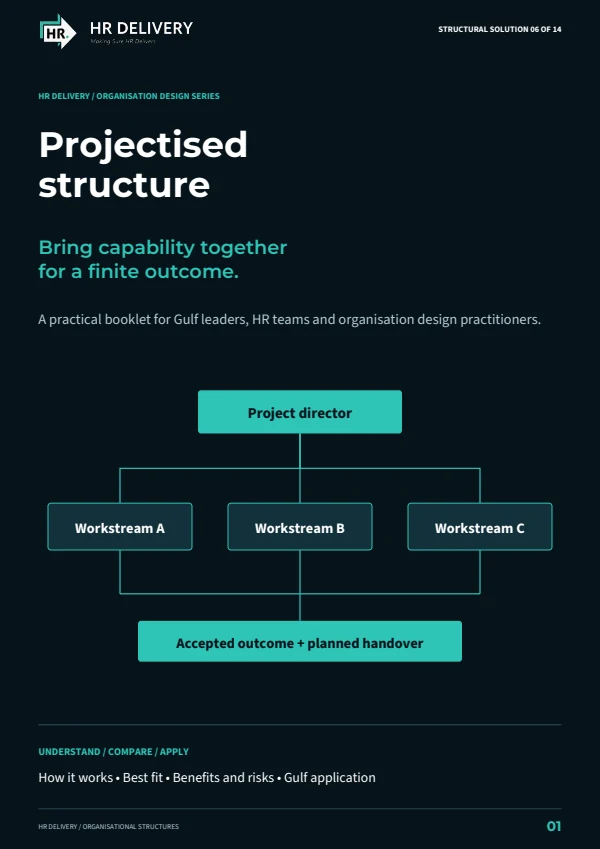
النمط الهيكلي 06 / 14
A defined project outcome with a start, end and acceptance conditions.
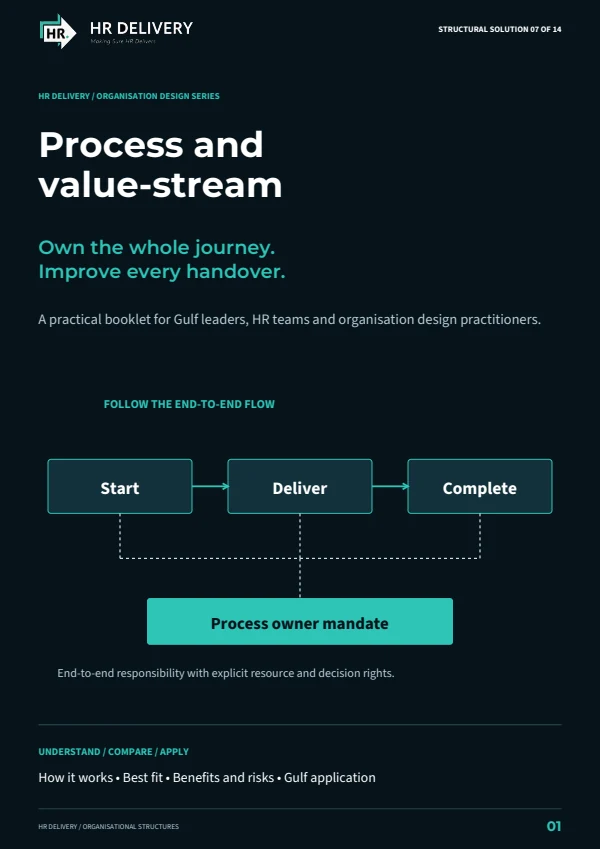
النمط الهيكلي 07 / 14
End-to-end process or value stream with an identifiable recipient and outcome.
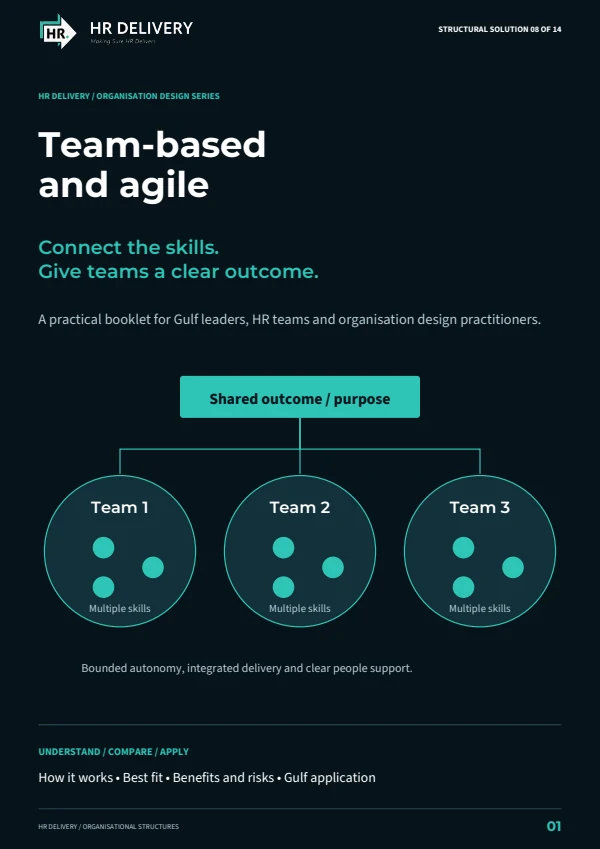
النمط الهيكلي 08 / 14
Persistent product, service or outcome teams with complementary capabilities.
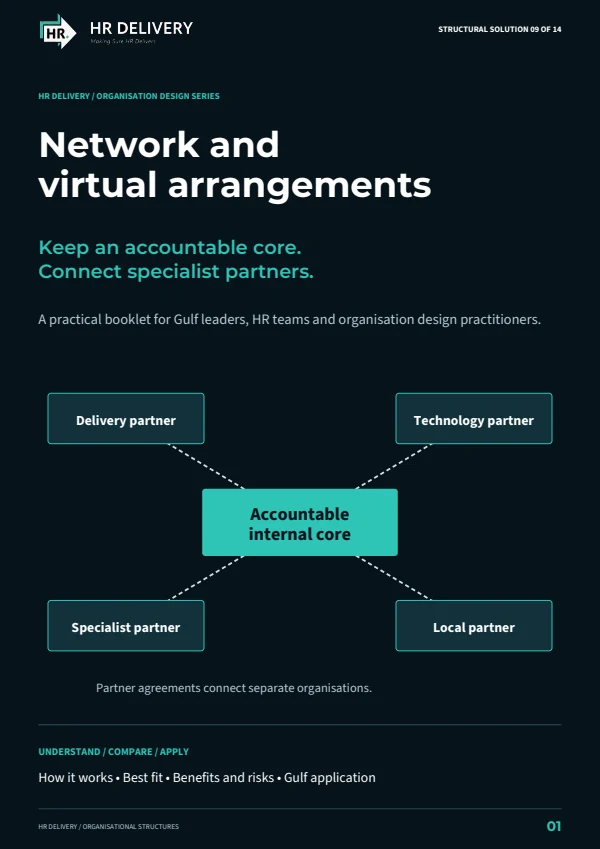
النمط الهيكلي 09 / 14
Connected capabilities across organisational boundaries; virtual working separately describes dispersion and digital coordination.
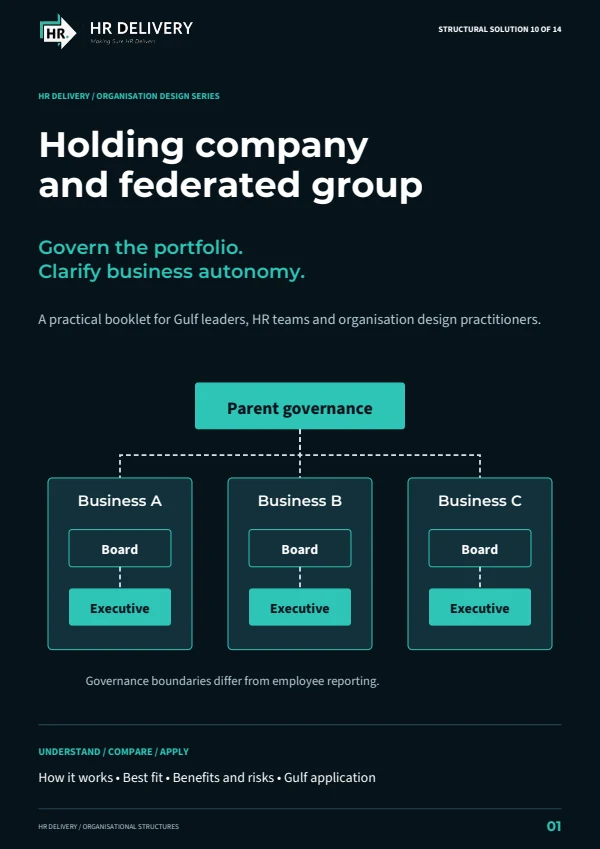
النمط الهيكلي 10 / 14
Operating businesses with separately defined governance and management responsibilities.
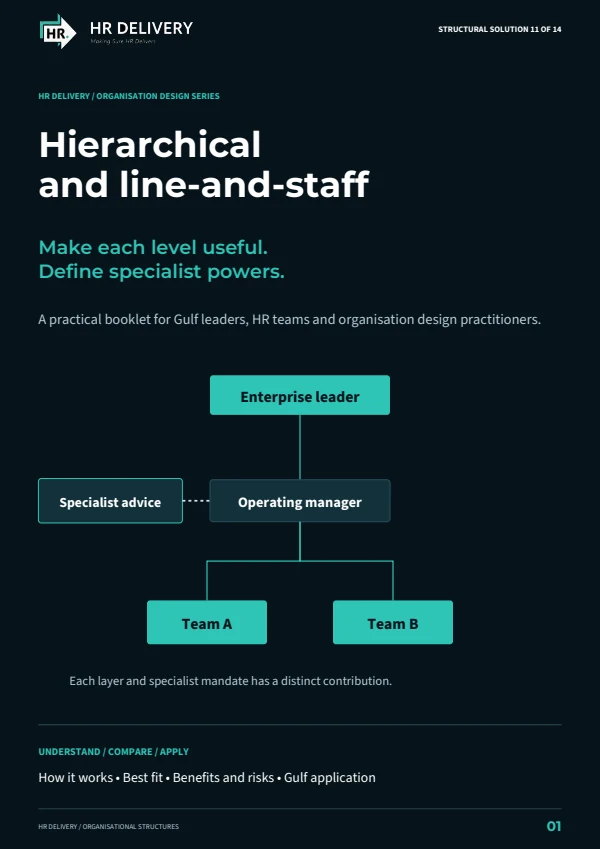
النمط الهيكلي 11 / 14
A reporting hierarchy combined with distinct specialist support or control roles.
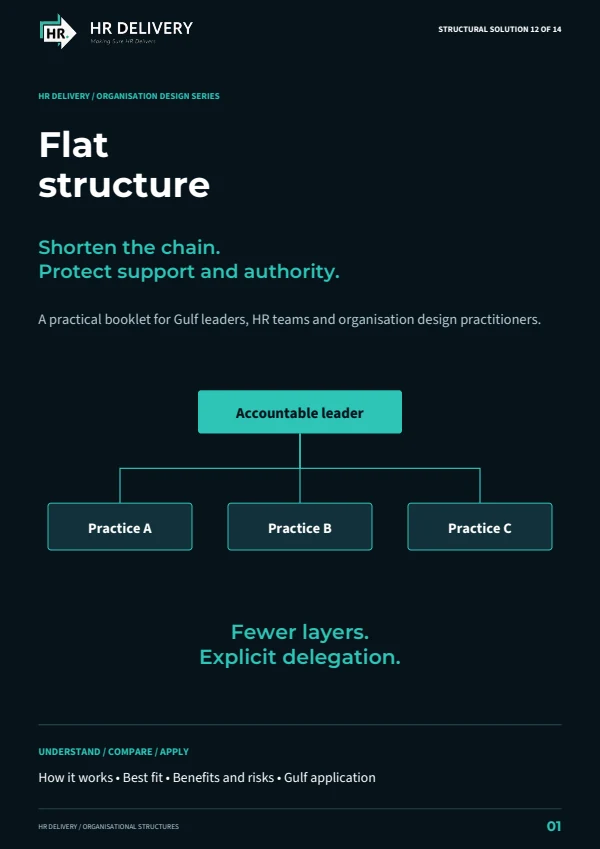
النمط الهيكلي 12 / 14
A reduced number of management layers applied to an explicitly identified grouping logic.
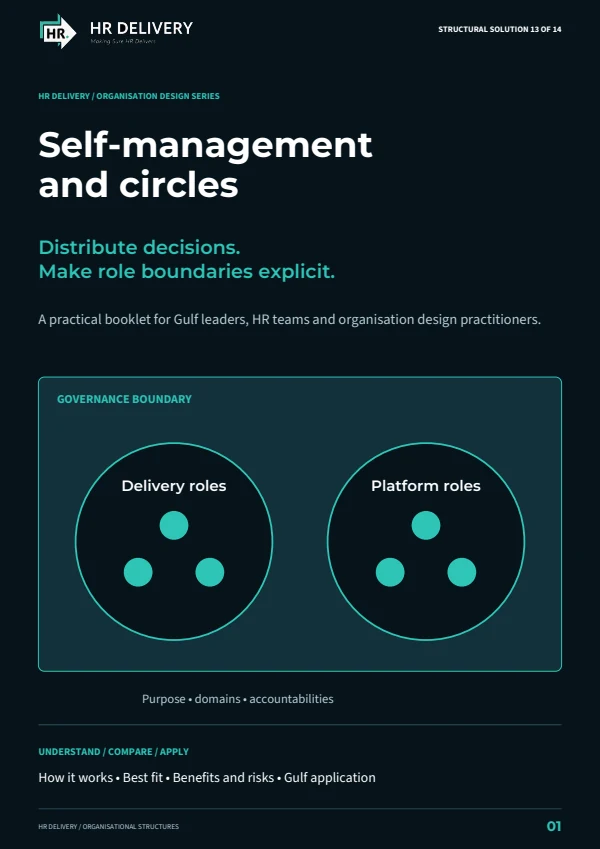
النمط الهيكلي 13 / 14
Role domains and circles with documented purposes, accountabilities and interfaces.
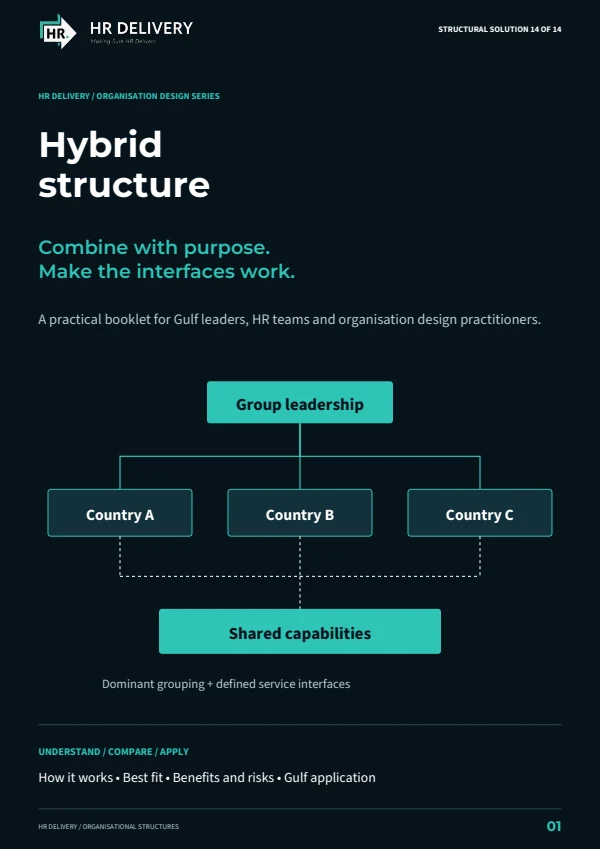
النمط الهيكلي 14 / 14
A named dominant grouping logic with explicitly justified additional structural components.
أظهر المفاضلات
قارن البدائل الهيكلية المهيّأة بالمبادئ المتفق عليها. وضّح الأدلة والأوزان والضوابط الإلزامية ومواطن عدم اليقين قبل اعتماد القرار.
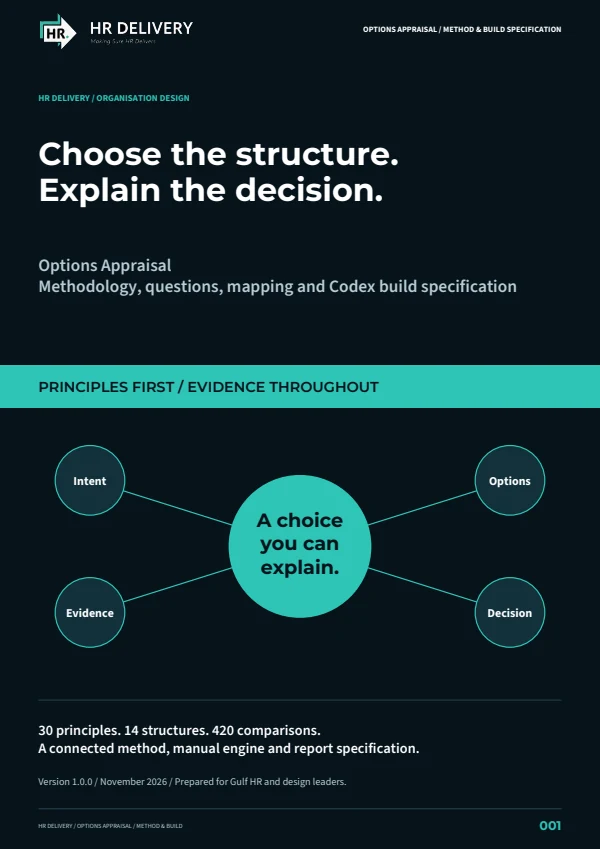
A principles-first method for comparing 14 structures against 30 principles, with 420 comparisons, questions, mapping, a manual engine and report specification.
اقرأ المستندمساحة تقييم البدائل
حدّد ٦–١٠ مبادئ و٢–٦ بدائل. عرّف المراسي ووازن المفاضلات وافحص ستة ضوابط إلزامية وحساسية النتائج. تستخدم الأداة منهجية التقييم والروابط الشرطية المقدّمة.
افتح تقييم البدائل ↗اعرض التقرير التوضيحياختبر التطبيق العملي
اختبر المؤسسة المقترحة قبل الالتزام بها. استخدم الدليل الكامل لفحص كيفية عمل المهام والقرارات والمسؤوليات والقدرة والتنسيق في ظروف فعلية.
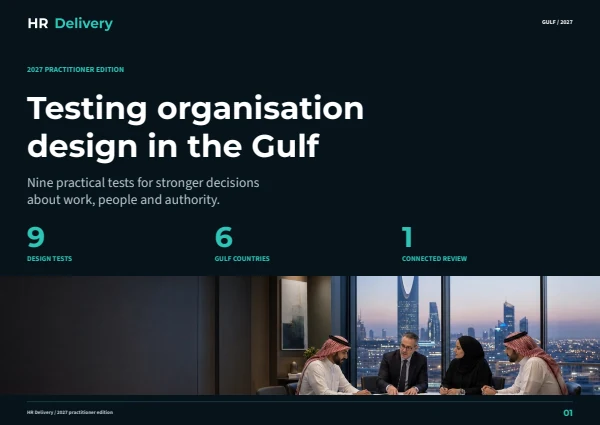
Apply nine practical design tests to decisions about work, people and authority, with application across the six Gulf countries and a connected review process.
اقرأ المستندالهيكل في الممارسة
اقرأ دراسة موثّقة لكل نمط هيكلي. افحص المؤسسات في سياقها ومع مصادرها المبيّنة؛ تعرض كل دراسة منظوراً محدداً للتصميم وليست هيكلاً يُنسخ دون تكييف.
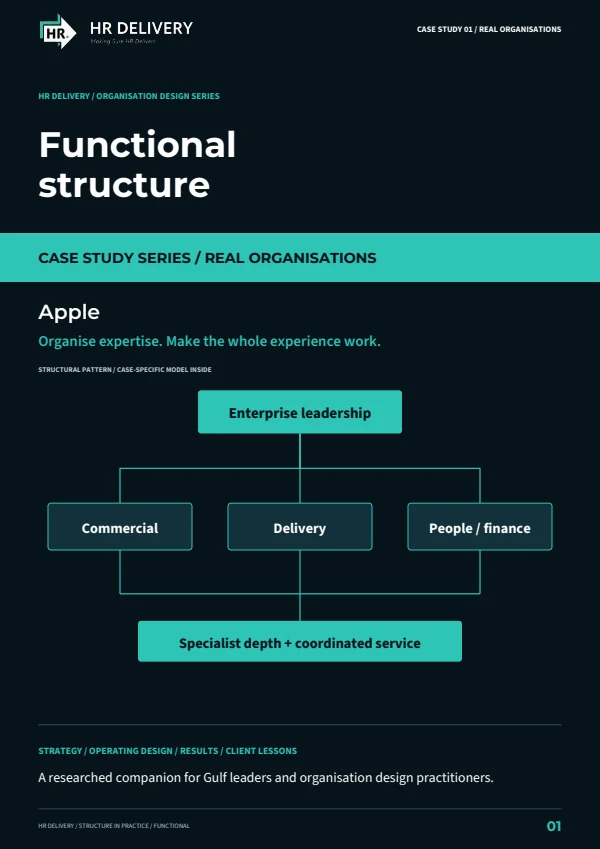
دراسة الحالة 01 / 14
Functional
Examine Apple through the functional pattern: strategy, operating design, results and lessons for Gulf practitioners. A case-specific model and source evidence support comparison rather than copying a structure wholesale.
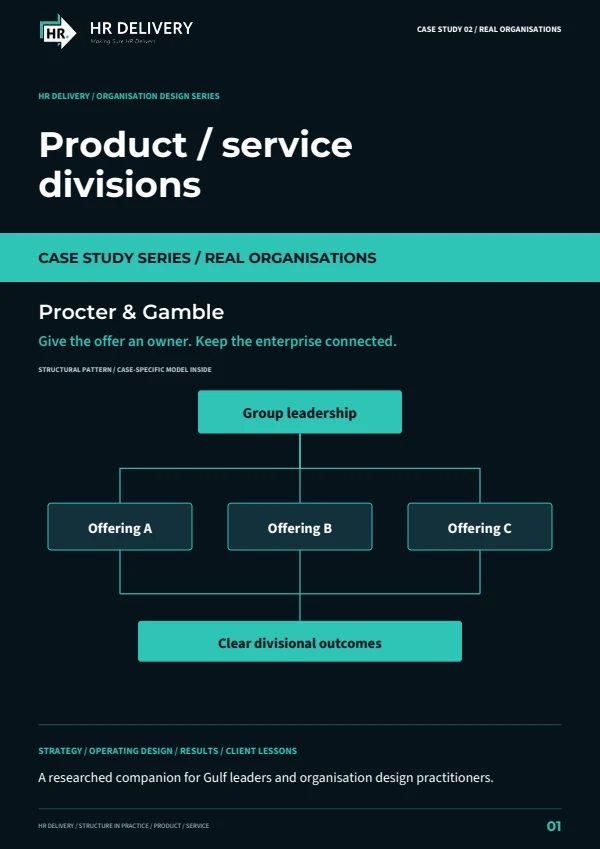
دراسة الحالة 02 / 14
Product / service divisions
Examine Procter & Gamble through the product and service divisions pattern: strategy, operating design, results and lessons for Gulf practitioners. A case-specific model and source evidence support comparison rather than copying a structure wholesale.
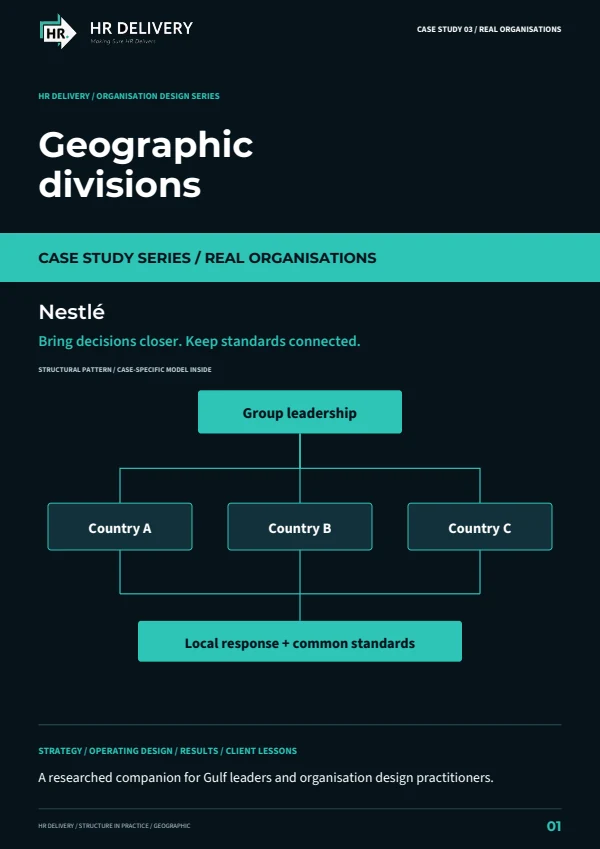
دراسة الحالة 03 / 14
Geographic divisions
Examine Nestlé through the geographic divisions pattern: strategy, operating design, results and lessons for Gulf practitioners. A case-specific model and source evidence support comparison rather than copying a structure wholesale.
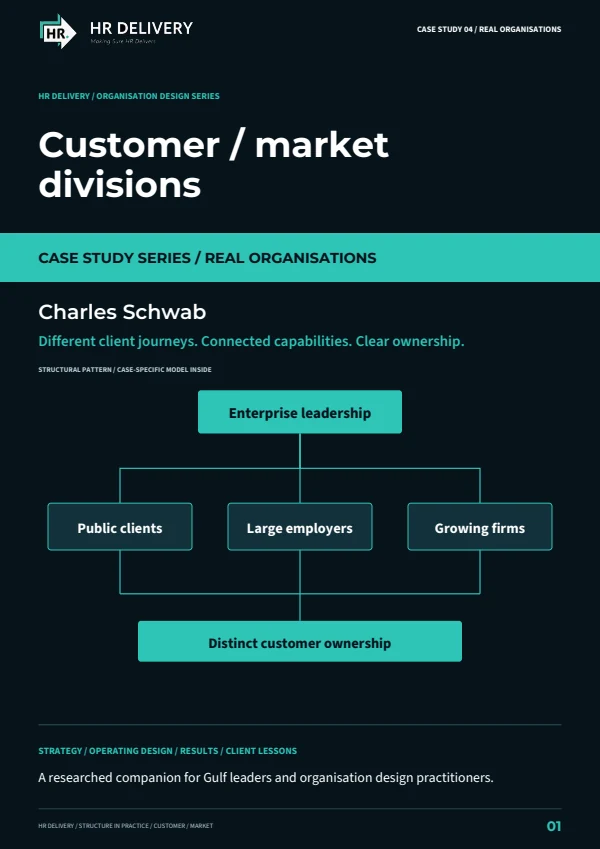
دراسة الحالة 04 / 14
Customer / market divisions
Examine Charles Schwab through the customer and market divisions pattern: strategy, operating design, results and lessons for Gulf practitioners. A case-specific model and source evidence support comparison rather than copying a structure wholesale.
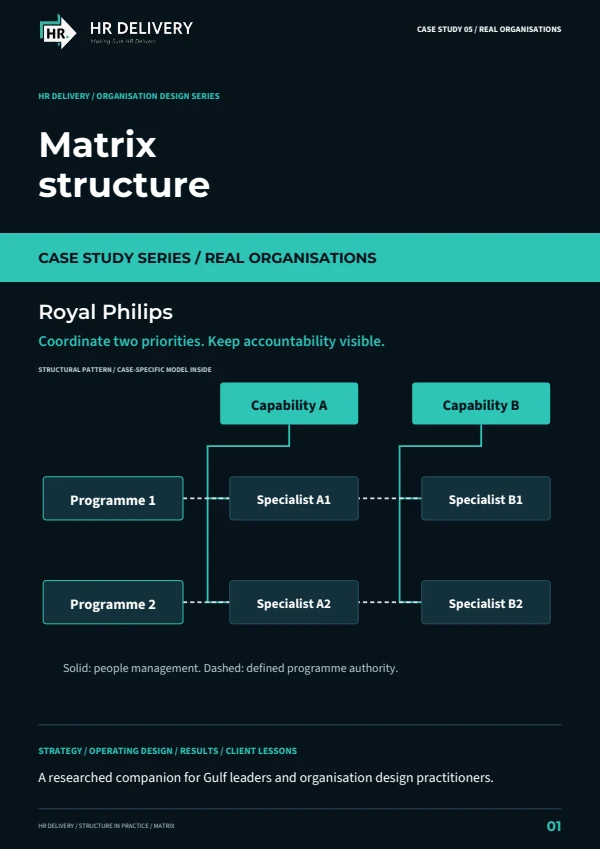
دراسة الحالة 05 / 14
Matrix
Examine Royal Philips through the matrix pattern: strategy, operating design, results and lessons for Gulf practitioners. A case-specific model and source evidence support comparison rather than copying a structure wholesale.
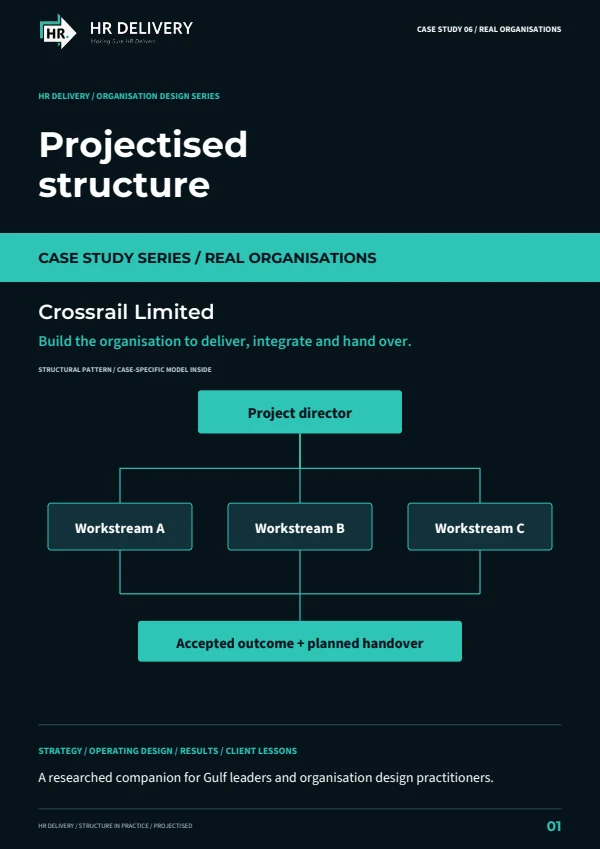
دراسة الحالة 06 / 14
Projectised
Examine Crossrail Limited through the projectised pattern: strategy, operating design, results and lessons for Gulf practitioners. A case-specific model and source evidence support comparison rather than copying a structure wholesale.
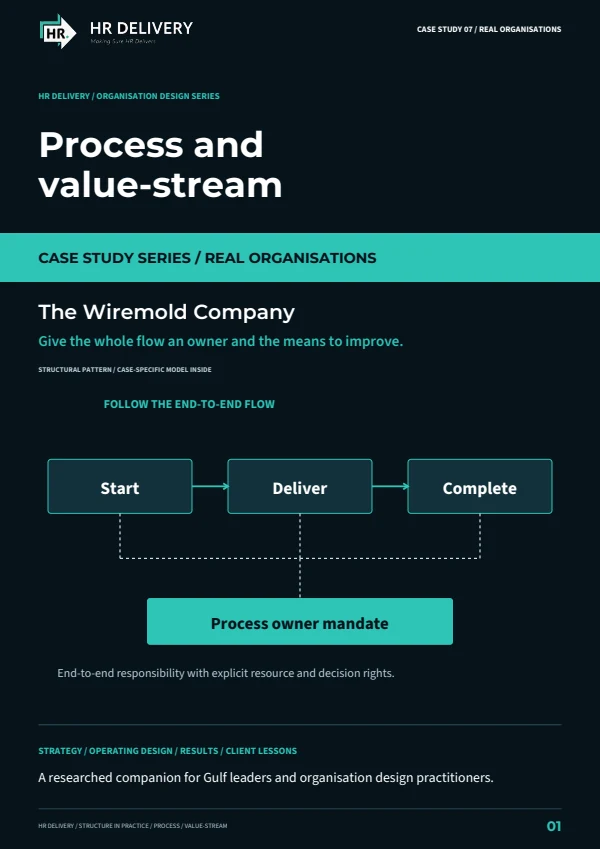
دراسة الحالة 07 / 14
Process / value-stream
Examine The Wiremold Company through the process and value-stream pattern: strategy, operating design, results and lessons for Gulf practitioners. A case-specific model and source evidence support comparison rather than copying a structure wholesale.
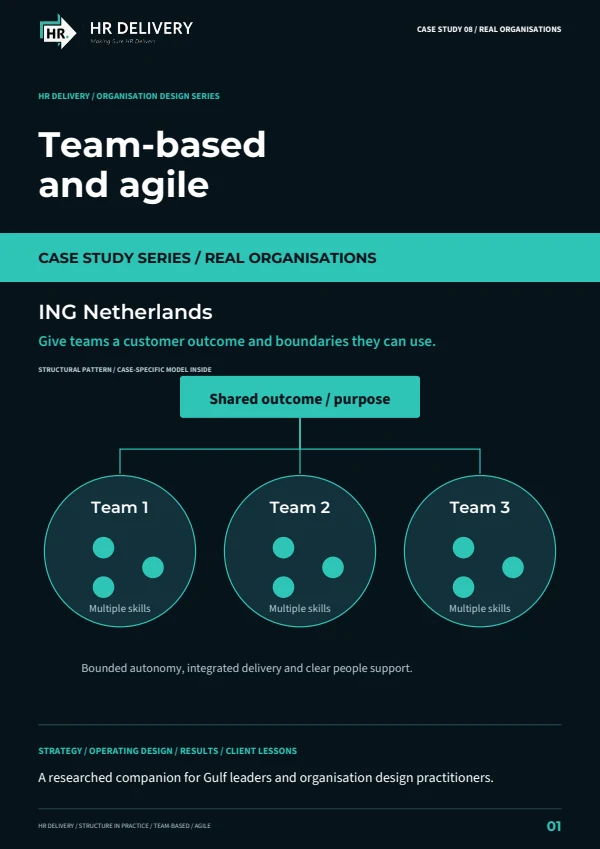
دراسة الحالة 08 / 14
Team-based / agile
Examine ING Netherlands through the team-based and agile pattern: strategy, operating design, results and lessons for Gulf practitioners. A case-specific model and source evidence support comparison rather than copying a structure wholesale.
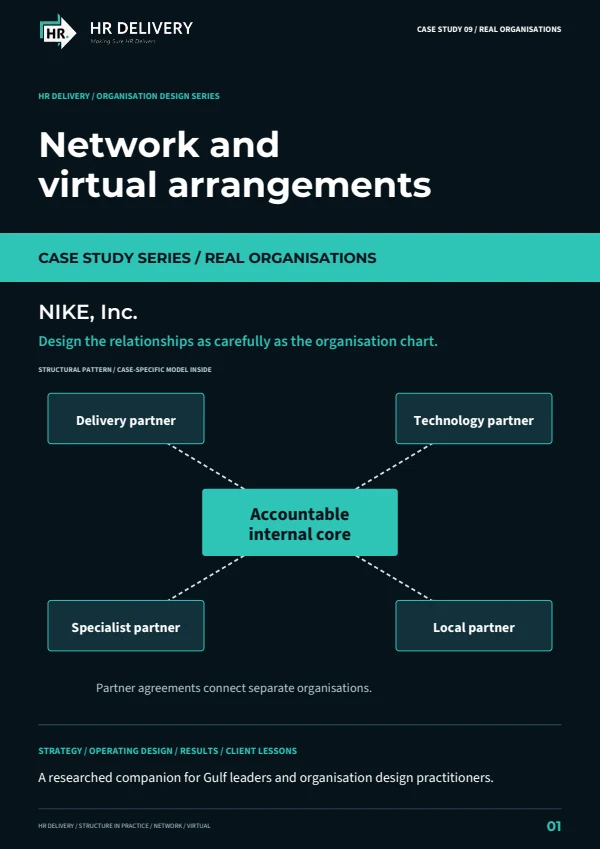
دراسة الحالة 09 / 14
Network / virtual
Examine NIKE, Inc. through the network and virtual pattern: strategy, operating design, results and lessons for Gulf practitioners. A case-specific model and source evidence support comparison rather than copying a structure wholesale.
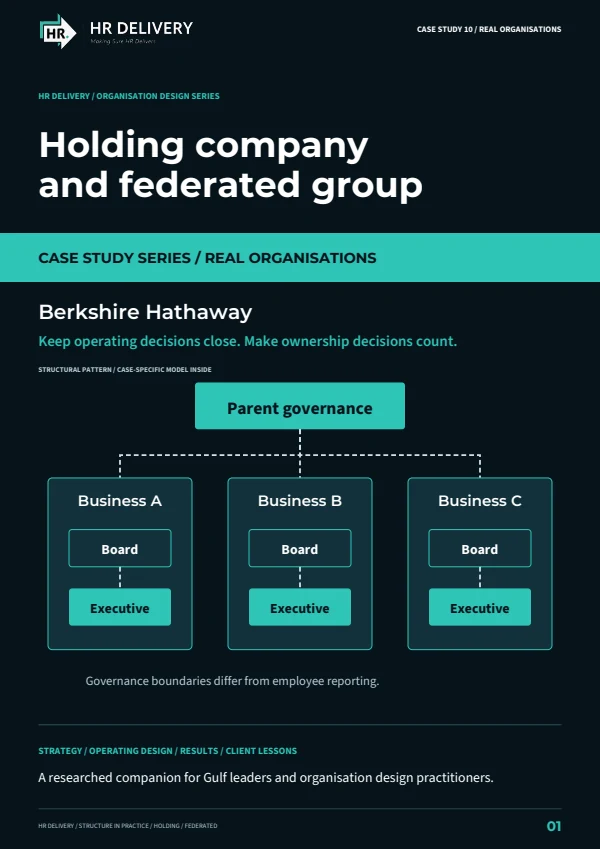
دراسة الحالة 10 / 14
Holding / federated
Examine Berkshire Hathaway through the holding company and federated group pattern: strategy, operating design, results and lessons for Gulf practitioners. A case-specific model and source evidence support comparison rather than copying a structure wholesale.
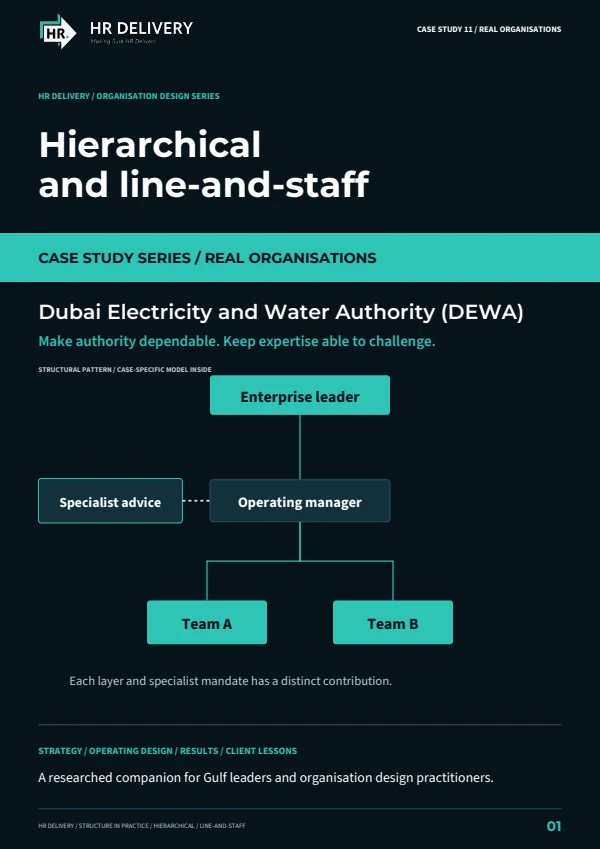
دراسة الحالة 11 / 14
Hierarchical / line-and-staff
Examine Dubai Electricity and Water Authority (DEWA) through the hierarchical and line-and-staff pattern: strategy, operating design, results and lessons for Gulf practitioners. A case-specific model and source evidence support comparison rather than copying a structure wholesale.
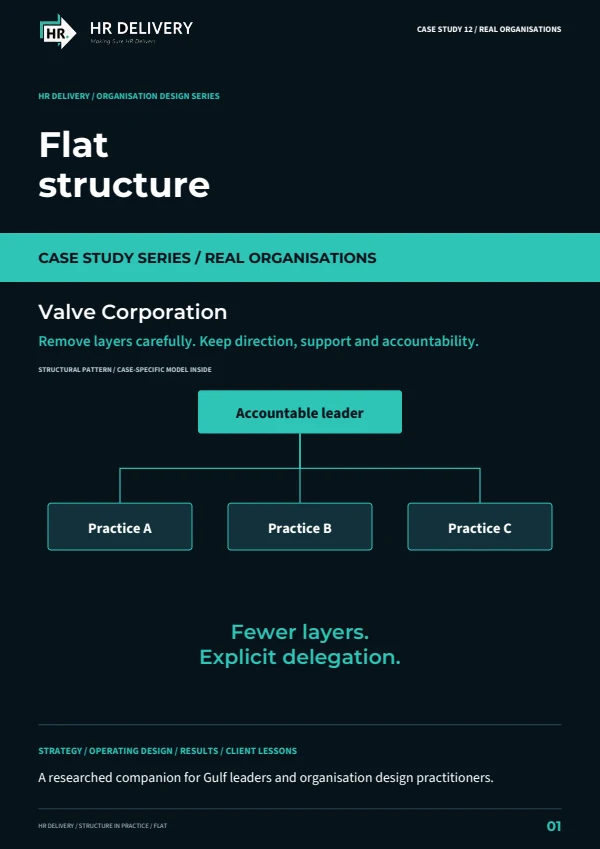
دراسة الحالة 12 / 14
Flat
Examine Valve Corporation through the flat pattern: strategy, operating design, results and lessons for Gulf practitioners. A case-specific model and source evidence support comparison rather than copying a structure wholesale.
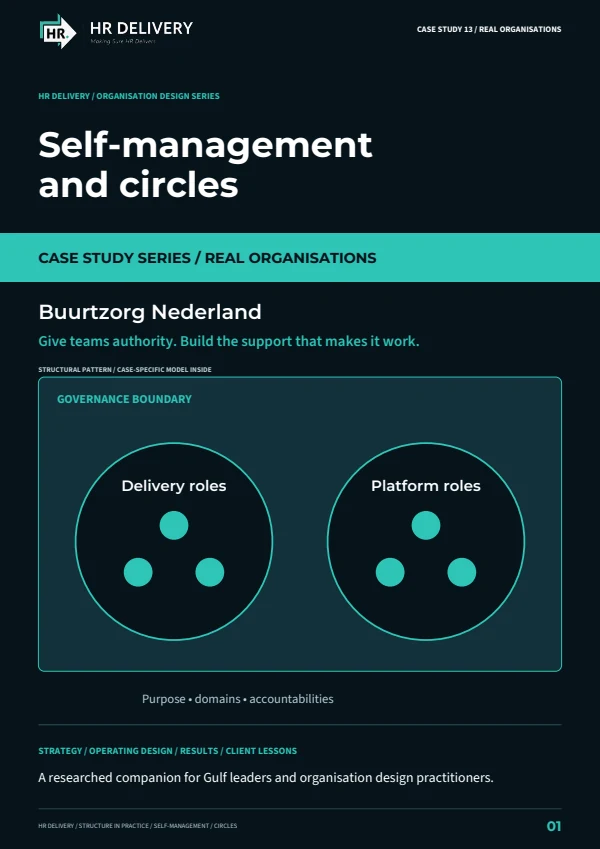
دراسة الحالة 13 / 14
Self-management / circles
Examine Buurtzorg Nederland through the self-management and circles pattern: strategy, operating design, results and lessons for Gulf practitioners. A case-specific model and source evidence support comparison rather than copying a structure wholesale.
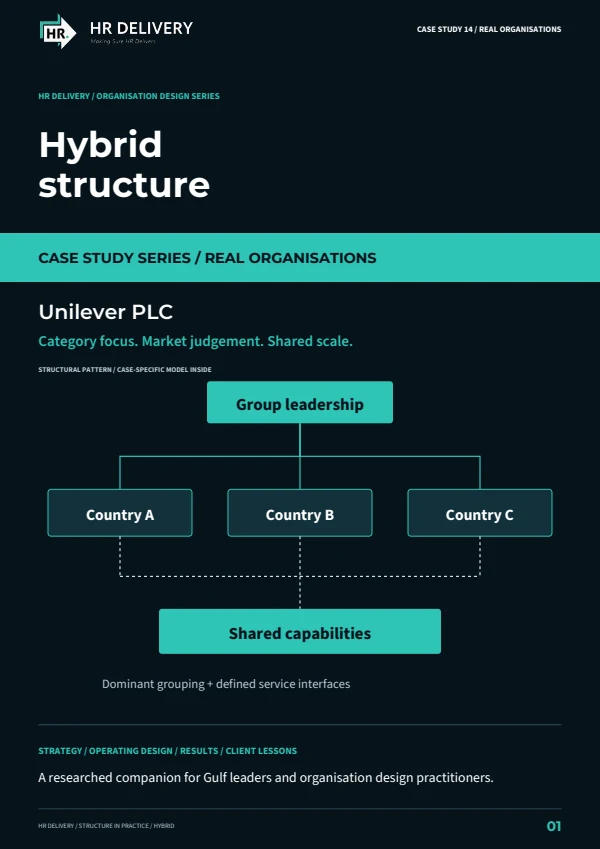
دراسة الحالة 14 / 14
Hybrid
Examine Unilever PLC through the hybrid pattern: strategy, operating design, results and lessons for Gulf practitioners. A case-specific model and source evidence support comparison rather than copying a structure wholesale.
اعثر على أداة الممارسة المناسبة
اختر المرحلة أو ابحث عن العمل المطلوب. يتضمن كل كتيّب أصلي إرشاداته وأمثلته. يتبع توزيع الأدوات على المراحل الخمس كتب الممارسة المقدّمة.
DIAGNOSE / أداة 1
Use this review to decide which organisational connections need investigation before changing reporting lines. It brings management practices and performance evidence into one conversation without pretending that a low score proves a structural problem.
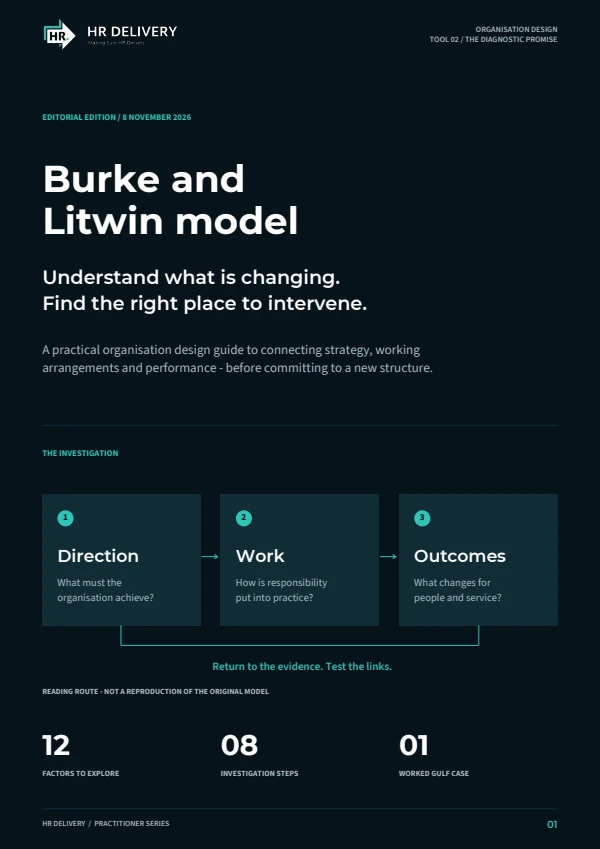
DIAGNOSE / أداة 2
Connect strategy, working arrangements and performance before committing to a new structure. Use the Burke and Litwin model to investigate change and identify where intervention is needed.
DISCOVER / أداة 3
Before choosing an organisational form, agree what must work for the organisation to fulfil its purpose. Critical success factors provide the small set of conditions that a design must protect, even when other attractive features have to be traded off.
DISCOVER / أداة 4
Use value driver analysis to decide which operating features matter to different stakeholders and why. Start with the outcome people value, then trace the conditions that could produce it; do not begin with a preferred department or technology.
DISCOVER / أداة 5
Use this matrix when leaders agree that everything matters but disagree about what should shape the operating model. Two constrained point allocations make their priorities explicit: one concerns operating focus and the other concerns the value proposition.
DISCOVER / أداة 6
Use this review to turn a strategic ambition into an operating requirement that a proposed design can actually meet. The decision is not simply what service to promise, but what demand, skills, authority and coverage arrangements that promise requires.
DIAGNOSE / أداة 7
Use benchmarking to identify a practice worth testing, not to import another organisation's chart or staffing ratio. The important decision is whether a performance difference remains meaningful after scope, case mix and measurement rules are aligned.
DIAGNOSE / أداة 8
Use this focused SWOT to decide what must change for one critical success factor to be delivered reliably. Keep the factor at the centre of every entry; this is not a general catalogue of everything good or bad about the organisation.
DIAGNOSE / أداة 9
Use this comparison to decide which working conditions must change for people to act in ways that support organisational success. Describe observable actions and investigate their context before concluding that employees need more motivation or training.
DISCOVER / أداة 10
Use this analysis to decide what the future organisation must deliver for the people affected by it. Translate needs into observable acceptance requirements while keeping requested solutions, preferences and authorised constraints distinct.
DIAGNOSE / أداة 11
Use gap analysis to establish exactly how current performance differs from the required state. It sizes the problem and directs investigation; it does not explain the cause or prove that a structural change will close the gap.
DIAGNOSE / أداة 12
Use this tool to investigate why a defined failure occurs before redesigning roles around a symptom. A fishbone broadens the set of plausible explanations; evidence, comparison and testing then narrow that set.
DESIGN / أداة 13
Use brainstorming to widen the range of plausible responses before the organisation commits to a familiar solution. Separate generating ideas from evaluating them, then preserve a clear trail from original suggestions to the shortlist.
DIAGNOSE / أداة 14
Use Pareto analysis to decide where a focused investigation could address the largest share of a measured problem. Rank comparable categories and calculate their contribution; do not assume the data must follow an exact 80/20 pattern.
ALIGN / أداة 15
Use this analysis to decide whether investment in better work is proportionate to the resources consumed by failure. Separate prevention and checking from rework, waste and external consequences, and distinguish released capacity from genuine cash savings.
DIAGNOSE / أداة 16
Use this tool to work backwards from a defined organisational problem, distinguish contributing conditions from effects, and convert supported findings into improvement objectives. Keep the original qualitative problem-tree application distinct from engineering fault-tree modelling and probability calculations.
DIAGNOSE / أداة 17
Use SWOT to choose a small set of defensible responses from evidence about internal capability and external conditions. The four categories organise discussion; the value comes from the decisions, ownership and tests that follow.
DIAGNOSE / أداة 18
Use 7S analysis to decide what must change alongside the organisation chart for a new way of working to function. Examine the relationships among strategy, structure, systems, shared values, skills, style and staff rather than scoring seven isolated headings.
DESIGN / أداة 19
Use a dependencies map to decide which interfaces need explicit ownership, service standards or redesign. Read every relationship directionally: a receiving role needs a defined output from a supplying role. That is different from reporting to that role.
DIAGNOSE / أداة 20
Use this matrix to decide whether a diagnosed problem needs formal structural change, a different governance arrangement, a process or system repair, or a combination. Compare remedies against the same evidence and choose a proportionate response that can meet the requirement.
DESIGN / أداة 21
Use this screen to choose among credible interventions that address the same diagnosed problem. Make expected impact, feasibility, cost, risk and prerequisites explicit before recommending a response or committing to implementation.
DESIGN / أداة 22
Define success before selecting or implementing the design. Use this tool to establish measures that can show whether outcomes improve, whether essential safeguards remain intact and whether benefits reach the intended users.
DIAGNOSE / أداة 23
Use this questionnaire to assemble an evidence-led case for changing, preserving or selectively adjusting the current structure. Ask consistent questions of different groups, then compare their answers with actual roles, decisions and case journeys.
DIAGNOSE / أداة 24
Set design principles before comparing preferred charts. Use them to state what a viable option must achieve, what can be traded and how reviewers will test each claim. A principle should guide a decision, not merely sound agreeable.
DESIGN / أداة 25
Start with the service promise, not the current department chart. Backward process analysis asks what customers must receive, what work produces it, what inputs the work needs and who must supply them. The resulting COPIS chain exposes design requirements before reporting lines are chosen.
DESIGN / أداة 26
A service requirement is a testable statement of what a particular user must be able to achieve. This tool converts evidence about customer situations into standards that organisation designers can use when choosing channels, locations, roles and capabilities.
DIAGNOSE / أداة 27
Not every process failure needs a reorganisation. This tool establishes which failures arise from the design of work, which arise from authority and accountability, and which require a change in organisational grouping. Its output is a justified alignment requirement, not a preselected organisation chart.
DESIGN / أداة 28
A useful process map shows how work actually travels from a triggering need to an accepted result. For organisation design, its value lies in making decisions, handovers, exceptions and ownership visible - not in producing the most elaborate diagram.
DIAGNOSE / أداة 29
Use a quick structured map to agree what a process is, what it produces and what must be investigated next. It is a compact process specification with an initial sequence - not an abbreviated organisation chart, an unstructured mind map or a substitute for detailed workflow design.
DESIGN / أداة 30
Optimisation means improving the whole process against explicit requirements, not making one team busier or one metric look better. This tool converts a verified workflow and performance evidence into prioritised, testable changes while protecting quality and control.
DESIGN / أداة 31
A process dependency exists when one process needs a specified output from another before it can perform to standard. This tool turns vague statements about coordination into explicit interface commitments, including timing, acceptance, failure recovery and ownership.
DESIGN / أداة 32
The process-supplier matrix identifies who supplies each critical input, what acceptable supply means and how failure is managed. It helps designers avoid creating a service team that is accountable for results but dependent on unowned or unreliable inputs.
DESIGN / أداة 33
Assess risk while design options can still change. This tool compares how alternative organisational arrangements could fail to meet their objectives and identifies the controls, capabilities and decision rights needed before an option can be accepted.
DIAGNOSE / أداة 34
A service can have enough annual labour hours and still fail every morning. Service capability planning translates demand into the people, skills, equipment and continuity arrangements needed at the place and time of delivery. It tests peak coverage separately from annual workload.
DIAGNOSE / أداة 35
An organisational capability is the ability to perform a defined kind of work reliably to a required standard. It combines people, processes, information, systems, resources and authority. This tool specifies that whole ability before deciding where it should sit or how it should be sourced.
DESIGN / أداة 36
When the organisation needs a different behaviour, first examine whether the work environment makes that behaviour possible and worthwhile. This tool identifies practical changes to information, authority, skills, time, incentives and supervision that support an observable action.
DESIGN / أداة 37
Test whether the proposed structure makes the required behaviour practical, coherent and reinforced by everyday decisions. A reporting-line change does not automatically create collaboration, ownership or responsiveness. This tool examines the behavioural consequences of grouping, authority, measures and coordination arrangements.
DIAGNOSE / أداة 38
Separate genuine design limits from assumptions, preferences and established habits. A constraints review protects the organisation from infeasible proposals while preventing unsupported claims from eliminating worthwhile alternatives before they are examined.
DIAGNOSE / أداة 39
Maturity analysis asks how consistently an organisational practice works, what evidence supports that judgement and what next level is necessary for the intended design. It is not a competition to achieve the highest possible label in every area.
DESIGN / أداة 40
Use structured questions to challenge whether a proposed organisation can perform its work. The questionnaire tests the purpose of layers, management load, grouping, coordination and decision routes. It is a design review, not a staff-opinion survey or a validated psychological scale.
DESIGN / أداة 41
Design how people obtain a service and how the organisation delivers, governs and recovers it before deciding which boxes appear on the chart. A service model connects users, value, channels, delivery processes, capabilities, information and provider relationships into one coherent arrangement.
DESIGN / أداة 42
Compare the present structure with agreed design principles using the same evidence and rating anchors. A structure gap map identifies where the arrangement does not yet fit the required design, then separates the size of that gap from its importance, effort and priority.
DESIGN / أداة 43
Choose among credible structural architectures using explicit requirements and trade-offs. Apply mandatory gates first, then compare preferences with agreed weights and evidence. The matrix supports judgement; it does not turn uncertain design assumptions into an automatic answer.
ALIGN / أداة 44
Design the decisions that make the structure work. A governance requirements matrix specifies who may decide, what evidence they need, which matters require a forum and how unresolved or exceptional cases move to the right authority.
ALIGN / أداة 45
A staffing norm is a locally justified planning rule for a defined service and set of operating conditions. It should explain the workload, quality, coverage and capability assumptions behind staffing - not present a convenient ratio as a universal truth.
ALIGN / أداة 46
Translate a defined workload into the equivalent full-time capacity needed to perform it. Keep that result separate from funded establishment, actual people and the roster required for coverage. Clear time accounting matters more than apparent precision to several decimal places.
DIAGNOSE / أداة 47
Observe one repetitive sequence closely enough to distinguish work, movement, inspection, delay and storage. The single-column process chart helps improve the method before assuming that more people or a different reporting line is required.
DESIGN / أداة 48
Assess how much management work a role must perform, not just how many people report to it. The diagnostic grid considers geography, planning, specialisation, evaluation and change, then compares the resulting load with the manager's actual available time.
ALIGN / أداة 49
Specify the lateral exchanges that positions need to perform their work. A position dependency map shows which role supplies what to another role, when it is needed, how it is accepted and what happens when the exchange fails. It complements reporting lines rather than replacing them.
ALIGN / أداة 50
Make participation in work and decisions explicit. RACI distinguishes who performs a task, who is answerable for its outcome, who must contribute before it is completed and who needs to know the result. It supports role clarity but does not itself grant decision authority.
ALIGN / أداة 51
How many people should actively make this decision together, and who can contribute without becoming a permanent group member?
ALIGN / أداة 52
What does this position exist to deliver, what can it decide, and what evidence justifies its requirements?
DIAGNOSE / أداة 53
How does observed effort compare with defensible required effort, and what explains the difference?
DESIGN / أداة 54
Should this activity exist in its present form, and what is the safest better way to achieve its purpose?
ALIGN / أداة 55
What exact organisation-design decision should be authorised, and why is it preferable to credible alternatives?
ALIGN / أداة 56
Which option creates the strongest evidenced balance of costs and benefits on a consistent basis?
ALIGN / أداة 57
Which activities consume shared resources, and how should those costs be attributed to services?
ALIGN / أداة 58
What transition route can introduce the approved design with acceptable disruption and a workable recovery path?
DELIVER / أداة 59
Which deliverables controlled by other owners must arrive before this work can start, continue or finish?
DELIVER / أداة 60
What could prevent a safe transition, how will we recognise it early, and who will act?
ALIGN / أداة 61
Who experiences this design change, in what way, and at what point in the transition?
ALIGN / أداة 62
What will the proposed establishment and transition actually cost, and how does that compare with occupied spend and approved budget?
DELIVER / أداة 63
What owned deliverables must be accepted before the new organisation can operate safely?
DELIVER / أداة 64
An organisation chart can be implemented exactly as planned and still fail its purpose. This framework establishes what evidence will show that a design is being used, delivering worthwhile outcomes and avoiding unacceptable harm. Build it before rollout, while a credible baseline and comparison are still possible.
DELIVER / أداة 65
Reliable evaluation begins with a reproducible counting rule. This tool turns an evaluation question into a practical collection specification: which records count, which events matter, how missing evidence is handled and who can reproduce the result. It protects organisation-design decisions from improvements that exist only in a changed spreadsheet.
DELIVER / أداة 66
A useful progress report makes a decision easier. It shows what has changed, how that compares with the agreed position, what is known about the cause and what action is required. This booklet turns an organisation-design update into a concise, evidenced management instrument rather than a catalogue of completed meetings.
ALIGN / أداة 67
A change strategy must make the future organisation workable for the people expected to operate it. Use this checklist to test the purpose, sponsorship, participation, capability, communication and support behind a design - not to count reassuring ticks. Every important gap should become an owned, resourced action or an explicit limit on rollout.
DISCOVER / أداة 68
An internal redesign can fail at its boundary with customers, suppliers, authorities or communities. This tool identifies what those external relationships require, verifies the status of each requirement and translates it into a design or transition response. It keeps confirmed obligations separate from expectations, assumptions and unresolved questions.
DESIGN / أداة 69
Bring the people who understand different parts of the organisation together to work on the same evidence, design choices and commitments. This approach is not a large presentation or a vote on a finished chart. It connects strategic direction with changes participants can help shape and begin to implement, within an explicit decision mandate.
ALIGN / أداة 70
Explain the case for change honestly while giving people a genuine opportunity to influence the choices that remain open. 'Sell' should mean making the reasoning understandable, not manufacturing agreement.
ALIGN / أداة 71
Make the requested decision, its evidence and its consequences clear enough for the authorised forum to decide. A presentation is successful when the decision is sound and recorded - not when every slide is delivered.
ALIGN / أداة 72
Secure an attributable decision for the exact design, establishment and implementation scope that will be released. Support, endorsement and authority to implement are not interchangeable.
ALIGN / أداة 73
Confirm whether an external or separately mandated authority must be consulted, then control the submission, response and resulting conditions. Do not invent a universal consultation route.
ALIGN / أداة 74
Turn general leadership support into consistent decisions, resources and visible actions. Alignment means agreement on the choices that matter, not identical opinions or a high questionnaire score.
DISCOVER / أداة 75
Understand who can affect the change, who is affected by it and how each group should participate. Use influence analysis to improve fair engagement - not to manipulate people or silence opposition.
DELIVER / أداة 76
Specify who needs to understand or do what, when they need it, who should explain it and how the organisation will know the message worked. Sending is an activity; understanding and correct action are outcomes.
لا توجد أدوات مطابقة. جرّب مرحلة أو عبارة أخرى.
إعادة هيكلة القوى العاملة / المرحلة هـ: التنفيذ
حوّل التصميم المعتمد إلى انتقال مدعوم للأفراد. اختر الدولة واستكشف ست مراحل مترابطة واتّبع 18 خطوة عملية، من الإعداد للتغيير إلى استقرار المنظمة الجديدة.
مساحة التنفيذ العملية
6 دول · 6 مراحل · 18 خطوة عملية
دليل الدولة المتكامل
104 صفحات · 55 نموذجاً · الإنجليزية · للعرض فقط
Apply the ordinary Qatar Labour Law only after checking current Article 3 exclusions, including the 2026 amendment. Route QFC, special-law/public/petroleum employment and excluded part-time/freelance arrangements separately. An employer name or Doha location alone does not establish scope.
اطّلع على الرحلة كاملة. اختر مرحلة، ثم اختر خطواتها ودليلها أو أدواتها وبواباتها أو مستندات الدولة.
إجراءات مشتركة مع فحوص ومستندات خاصة بكل دولة في كل مرحلة.
جارٍ تحميل إرشادات الخطوة…
تصفّح جميع الخطابات والنماذج وضوابط الدولة الأصلية لهذه المرحلة. اختر خطوة عملية لعرض نماذجها المقترحة، أو اعرض جميع مستندات المرحلة.
لا توجد مستندات تطابق البحث في الخطوة المحددة. جرّب نوعاً آخر أو امسح البحث أو اختر خطوة مختلفة.
المصدر: أدلة تنفيذ 2027. تاريخ فحص البحث المبيّن في الأدلة: 8 نوفمبر 2026. أعد التحقّق من مسار الدولة ووقائع الحالة واعتمادات الإصدار قبل استخدام المستند. وثائق المصدر باللغة الإنجليزية.
تابع في مكتبة HR DELIVERY
تجتمع هنا موارد التصميم التنظيمي والموارد الداعمة الحالية: حقائب الأدوات والكتب الإلكترونية والمقالات المطوّلة والموجزة وأدلة التشخيص. اختر النوع المناسب لمستوى التفصيل المطلوب.
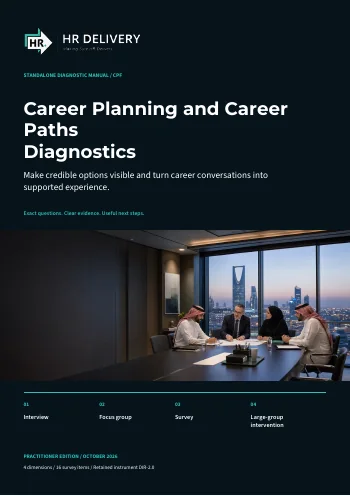
دليل تشخيص · التصميم
توضيح الخيارات المهنية وتحويل الطموحات إلى خطوات تطوير عملية.
استكشف المورد ↗
دليل تشخيص · التصميم
مساعدة الأفراد على فهم التغيير والاستعداد له وتطبيق أساليب العمل الجديدة.
استكشف المورد ↗
دليل تشخيص · التصميم
توضيح السلوكيات والمهارات والقدرات اللازمة للعمل بفاعلية.
استكشف المورد ↗
دليل تشخيص · التصميم
توضيح الخدمات المطلوبة من إدارة الموارد البشرية والقدرات اللازمة لتقديمها بكفاءة.
استكشف المورد ↗
دليل تشخيص · التصميم
دعم قرارات متسقة بشأن مسؤوليات الوظائف ومتطلباتها وقيمتها.
استكشف المورد ↗
دليل تشخيص · التصميم
استكشف ثمانية أبعاد تنظيمية و74 عبارة تشخيصية لتحويل الأدلة إلى إجراءات محدّدة.
استكشف المورد ↗
دليل تشخيص · التصميم
مواءمة الهيكل والأدوار والقرارات وسير العمل مع أهداف المؤسسة.
استكشف المورد ↗
دليل تشخيص · التصميم
تخطيط الأدوار والمهارات والطاقة الاستيعابية اللازمة مع تطوّر المؤسسة.
استكشف المورد ↗
كتاب إلكتروني · التصميم
تعرّف إلى إسهامات خمسين منهجاً للتغيير وحدودها وكيفية الاختيار بينها. تغطي سبع مجموعات التغيير المخطط، والتشخيص، والاستعداد، والثقافة، والتبنّي، والتعقيد والاستدامة. وتساعد المقارنات والحالات المتكاملة وموارد اتخاذ القرار على الجمع بين مناهج مناسبة لمعالجة سؤال مؤسسي واقعي، مع فهم وظيفة كل نموذج وحدود استخدامه.
استكشف المورد ↗
كتاب إلكتروني · التصميم
قيّم ما تحتاج إدارة الموارد البشرية إلى إنجازه والأدلة التي تبيّن جاهزيتها. يوجّه إطار تقييم القدرات تحديد الغرض وتوقعات الأدوار وتصميم الأدلة وتوحيد أحكام التقييم والتطوير، بينما يساعد منظور مستقل لمنظومة الخدمات على فحص الإدارة والفريق. وتساعدك الحالات التطبيقية وعينات العمل والسجلات العملية على التمييز بين كفاءة الفرد وفجوات الطاقة الاستيعابية أو الإجراءات، وتحويل النتائج إلى خارطة تحسين محددة الأولويات.
استكشف المورد ↗
كتاب إلكتروني · التصميم
ابدأ التصميم التنظيمي بالنتائج والعمل الفعلي، ثم افحص الهيكل القادر على دعمهما. يربط إطار التصميم التنظيمي لدى HR Delivery مبادئ التصميم وتدفقات القيمة وصلاحيات القرار والأدوار وواجهات العمل والقدرة التشغيلية. وتساعد الحالات التطبيقية ومقارنات الخيارات والموارد القابلة للاستخدام على تقييم البدائل والتخطيط للانتقال ومراجعة فاعلية النموذج التشغيلي في الممارسة.
استكشف المورد ↗
كتاب إلكتروني · التصميم
استقصِ التحديات المؤسسية قبل اختيار التدخل المناسب. توجّه الأبعاد الثمانية لإطار التشخيص التنظيمي لدى HR Delivery تحديد نطاق العمل وجمع الأدلة وتفسيرها وتحويلها إلى إجراءات. وتربط الحالات التطبيقية والسجلات العملية بين المقابلات والاستبيانات والبيانات التشغيلية والتفسيرات البديلة وحوار المعنيين، لتساعدك على التمييز بين العَرَض والتفسير المدعوم بالأدلة وصياغة نتائج تفيد قراراً واقعياً.
استكشف المورد ↗
كتاب إلكتروني · التصميم
حوّل القيم المؤسسية إلى توقعات أوضح وسلوك يمكن ملاحظته. باستخدام إطار الكفاءات والقدرات وخريطة الثقافة 3E، يميّز الكتاب بين المبادئ والمؤشرات السلوكية والممارسة الفنية وأدلة التقييم. وتساعد الحالات والموارد العملية على بناء ملفات الأدوار واختبار فائدتها ودمج الأطر في الممارسة الإدارية ومراجعة الآثار غير المقصودة.
استكشف المورد ↗
كتاب إلكتروني · التصميم
افحص كيف يتدفق عمل الموارد البشرية فعلياً قبل إعادة تصميم عملية أو إضافة تقنية. تعلّم تحديد القيمة ورسم مسار العمل وقياس الأداء واستقصاء الأسباب واختبار التحسينات. وتساعد الأطر المرتبطة والحالات التطبيقية والموارد العملية على التمييز بين التدفق والجودة والجهد والتكلفة، ونقل المسؤولية، وتقييم القيمة المؤسسية الناتجة عن التحسين.
استكشف المورد ↗
كتاب إلكتروني · التصميم
حوّل التغيير المعلن إلى ممارسات يفهمها الأفراد ويستطيعون الاستمرار بها. يربط أساس 4C بين الوضوح والالتزام والكفاءة والقدرة التشغيلية وبين الرعاية والمشاركة والتواصل والتبنّي. وتساعد الحالات التطبيقية ومراجعات الجاهزية وحوارات المديرين وموارد التخطيط على فهم المخاوف ودعم التنفيذ وتقييم ما يتغيّر في العمل اليومي بعد الإطلاق.
استكشف المورد ↗
كتاب إلكتروني · التصميم
افحص مدى استعداد الأفراد والأنظمة لتنفيذ التغيير المقترح. يميّز نهج 4C بين الوضوح والالتزام والكفاءة والقدرة التشغيلية، ثم يربط الأدلة بإجراءات محددة. تعلّم تصميم تقييم متناسب، وفهم اختلاف وجهات النظر، وفحص القيود التشغيلية، وصياغة توصيات مدروسة للتنفيذ عبر حالات تطبيقية وسجلات عملية.
استكشف المورد ↗
كتاب إلكتروني · التصميم
ابدأ إعادة الهيكلة بفهم العمل والقدرات المطلوبة قبل رسم هيكل تنظيمي جديد. يناقش الكتاب البدائل، وتصميم الأدوار، والحوكمة، والأثر على الأفراد وإدارة الانتقال باستخدام إطار التصميم التنظيمي. وتوضح الحالات التطبيقية الفروق بين الوظائف والأفراد والتكاليف والقدرات المؤهلة لدعم تغييرات قابلة للتفسير والتنفيذ والتقييم.
استكشف المورد ↗
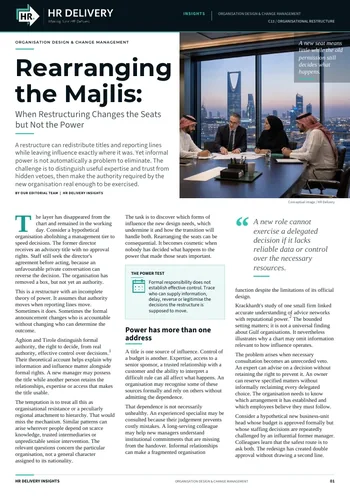
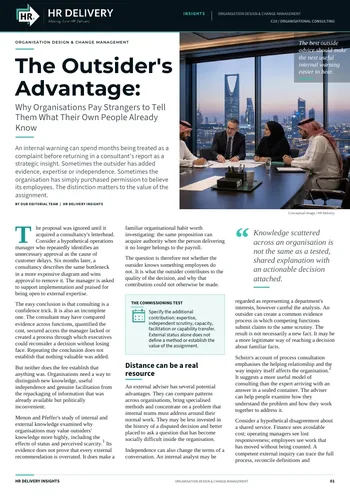
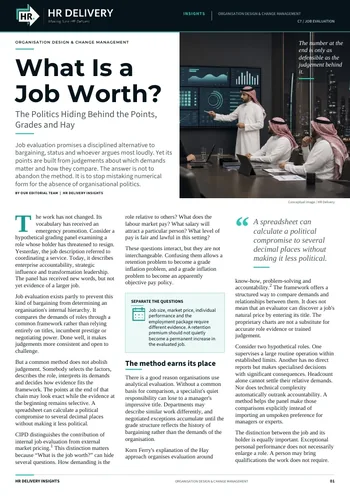
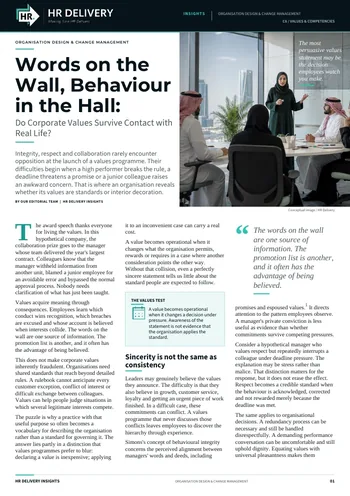

مقال موجز · التصميم
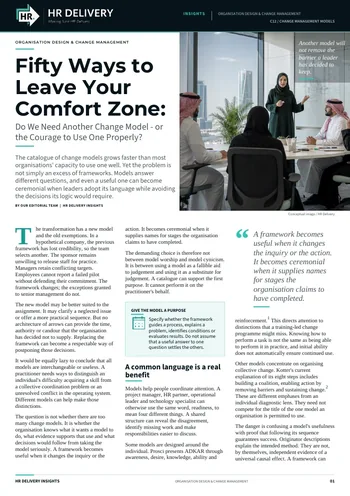
Speed is not produced by shouting faster. It is produced by designing work properly.
استكشف المورد ↗
مقال موجز · التصميم
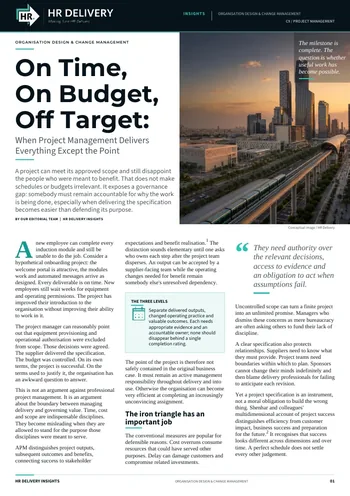
HR cannot be strategic while behaving like a help desk with a grander vocabulary.
استكشف المورد ↗
مقال موجز · التصميم
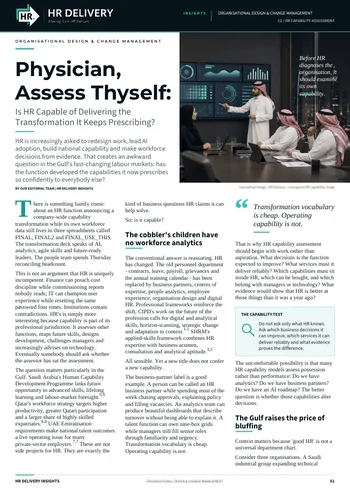
In Saudi Arabia, transformation is no longer a decorative word. It is a delivery test.
استكشف المورد ↗
مقال موجز · التصميم
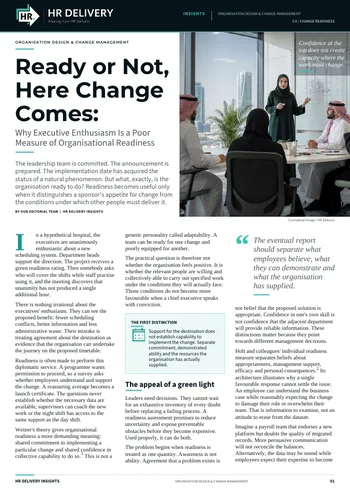
A bad restructure does not remove confusion. It merely gives confusion a new reporting line.
استكشف المورد ↗
كتاب إلكتروني · ممارسة داعمة
حسّن العمل بين الأفراد عبر وضوح الهدف وقوة العلاقات والممارسات اليومية للفريق. تربط سبع ممارسات لتطوير الفرق التشخيص بالأدوار والثقة والتواصل والقرارات والتحدي البنّاء. وتساعد إرشادات التقييم والمهام التطبيقية والحالات وبرنامج التسعين يوماً على تحويل الفهم إلى التزامات مشتركة ومراجعة تحسّن العمل الجماعي.
استكشف المورد ↗
كتاب إلكتروني · ممارسة داعمة
اربط الأجور والمزايا والتقدير من خلال نموذج قرارات المكافآت، مع التمييز بين قيمة الوظيفة وأدلة السوق والإسهام والتمويل. وتوجّه حالتان تطبيقيتان وخمسة عشر مورداً عملياً صياغة مبادئ المكافآت وهياكلها وقواعد تطورها، واختبار القدرة على تحمّل التكلفة والعدالة، والتخطيط للتنفيذ والحوكمة بما يجعل المنظومة واضحة وقابلة للتطبيق.
استكشف المورد ↗
كتاب إلكتروني · ممارسة داعمة
صمّم إدارة الموارد البشرية انطلاقاً من الخدمات التي يحتاجها الأفراد والوقت والخبرات اللازمة لتقديمها. يربط الكتاب اختصاصات الإدارة وعبء العمل ونموذج التشغيل والأدوار والتقنية والاستثمار من خلال خريطة الخدمات والقدرات. ويساعد نموذجان تطبيقيان متكاملان واثنا عشر مورداً عملياً على مقارنة البدائل والتخطيط للانتقال ومراجعة أداء الخدمات.
استكشف المورد ↗
كتاب إلكتروني · ممارسة داعمة
طوّر استراتيجية تربط أولويات المؤسسة بقرارات عملية بشأن الأفراد والعمل. يشرح الكتاب التشخيص، وتحديد النتائج الاستراتيجية، والاستثمار، والحوكمة والتنفيذ من خلال نظام الاستراتيجية إلى القيمة. وتساعد الأمثلة التطبيقية والموارد العملية على المفاضلة بين الخيارات، وإشراك المعنيين، ومراجعة إسهام استراتيجية الموارد البشرية في النتائج.
استكشف المورد ↗
كتاب إلكتروني · ممارسة داعمة
طوّر الحكم المهني والممارسات العملية اللازمة لشريك أعمال موارد بشرية فعّال. تعرّف إلى نشأة الدور، وافهم عمل المؤسسة، واتفق على التوقعات، وشخّص الطلبات قبل تقديم المشورة، وأثّر في القرارات بالأدلة. وتربط الحالات والموارد العملية وبرنامج تطوير يمتد لأربعة وعشرين أسبوعاً الفهم التجاري والحوارات الحساسة والتعاون مع المتخصصين بالتطبيق والتغذية الراجعة.
استكشف المورد ↗
كتاب إلكتروني · ممارسة داعمة
اختر الأطر وفق القرارات التي تحتاج إلى دعمها. تشرح أربعة فصول تأسيسية التشخيص والاختيار والتطبيق، تليها أدلة من خمس صفحات لكل إطار من أطر HR Delivery التسعة والعشرين. وتوضح الحالات المتكاملة والمقارنات والسجلات العملية كيفية الجمع بين النماذج بتناسب، ومراجعة الافتراضات، وربط الأدلة بالإجراءات عبر سبعة مجالات للموارد البشرية والتطوير التنظيمي.
استكشف المورد ↗
كتاب إلكتروني · ممارسة داعمة
اربط طموحات المؤسسة بالأفراد والمهارات والقدرة اللازمة لتحقيقها. يشرح الدليل، من خلال نظام 8A، خط الأساس للقوى العاملة، والطلب والعرض، والفجوات المهمة، وخيارات الاستجابة والتخطيط المالي. وتتيح خطتان تطبيقيتان وموارد عملية اختبار الافتراضات، وتحديد المسؤوليات، وتعديل القرارات مع تطور الأدلة.
استكشف المورد ↗

مقال موجز · ممارسة داعمة
Ambitious talent does not leave because it dislikes the office furniture. It leaves because the future looks foggy.
استكشف المورد ↗
مقال موجز · ممارسة داعمة
Many organisations have an admirable habit of choosing the medicine before examining the patient.
استكشف المورد ↗
مقال موجز · ممارسة داعمة
Knowledge transfer is one of those phrases that sounds successful until someone asks what, exactly, has been transferred.
استكشف المورد ↗
مقال موجز · ممارسة داعمة
Most HR dashboards are guilty of a quiet crime: they report what is easy to count rather than what is useful to know.
استكشف المورد ↗
مقال موجز · ممارسة داعمة
Governance is rarely glamorous, which is one reason weak organisations neglect it until something expensive happens.
استكشف المورد ↗
مقال موجز · ممارسة داعمة
There is an old version of HR that waits outside the meeting room and asks what has already been decided. It is tidy, loyal, reactive and increasingly obsolete.
استكشف المورد ↗
مقال موجز · ممارسة داعمة
A spreadsheet can count heads. It cannot, by itself, imagine capability.
استكشف المورد ↗
مقال موجز · ممارسة داعمة
Busyness is not evidence of readiness. It is often evidence that readiness is missing.
استكشف المورد ↗
مقال موجز · ممارسة داعمة
Strategic workforce planning is the art of refusing to be surprised by your own growth.
استكشف المورد ↗
مقال موجز · ممارسة داعمة
HR maturity is not measured by the number of policies, systems or initiatives a function can display. It is measured by whether the business receives better decisions because HR exists.
استكشف المورد ↗
مقال موجز · ممارسة داعمة
Many HR projects fail not from lack of intelligence, but from a surplus of opinion and a shortage of discipline.
استكشف المورد ↗
مقال موجز · ممارسة داعمة
A board that only asks HR about headcount has decided not to know very much.
استكشف المورد ↗
مقال موجز · ممارسة داعمة
The announcement is not the change. It is merely the noise that precedes the hard part.
استكشف المورد ↗
لا توجد موارد مطابقة. عدّل المرشحات.
اربط العمل
افتح بوابة قسم التصميم التنظيمي لتخطيط القوى العاملة والأوصاف الوظيفية والتقييم والهياكل والطبقات ونطاقات الإشراف ونمذجة الرواتب. استخدم أدلة المراحل لربط هذه الأدوات بمساحات HR Delivery الأوسع.
ما الذي يساعدك عليه
الأدوات والاستوديوهات وموارد العمل
افتح البوابة الحالية لأدواتها ومواردها. يتبع الوصول داخل الاستوديو الأدوار والصلاحيات المحددة لمساحة العمل.
استخدم موارد التصنيف والمسؤوليات والواجبات والأوصاف الوظيفية. يساعد بنك الأوصاف الوظيفية على العثور على مواد مناسبة.
اعمل على عوامل التقييم المدعومة واحتفظ بتقييمات الوظائف وتقاريرها. اربط الدرجات بمحتوى الوظيفة ومسؤولياتها.
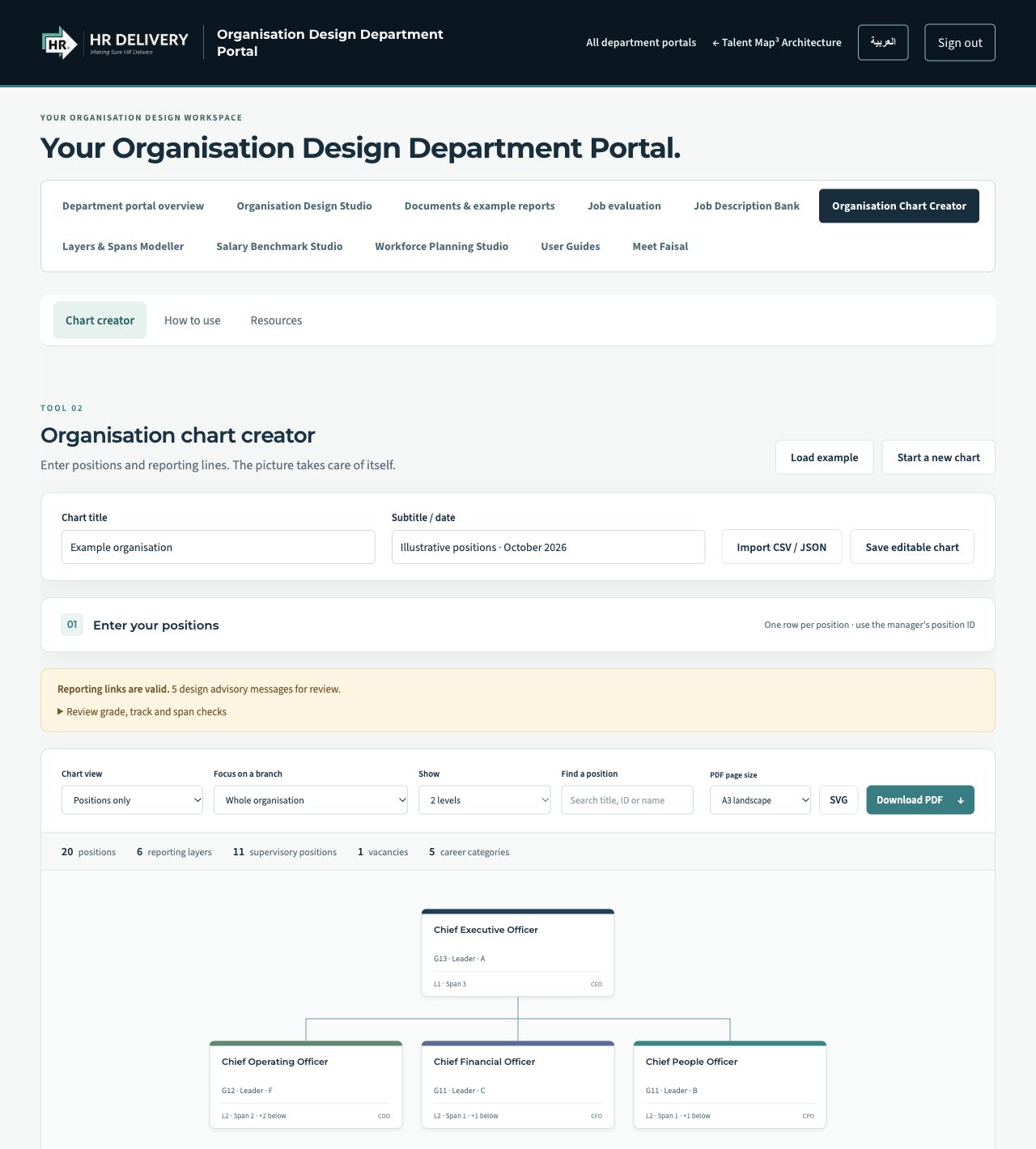
أدخل الوظائف وخطوط الإشراف وأضف أسماء الموظفين عند الحاجة. استخدم العرض الوظيفي أو المسمّى لمناقشة الهيكل والأشخاص.
استكشف نطاقات الإشراف والمستويات التنظيمية بجانب المخطط. ادرس الأسئلة الهيكلية برؤية أوضح للمؤسسة.
اجمع الطلب والطاقة والقدرات والتكلفة في سيناريوهات التخطيط. استكشف النماذج التوضيحية وابنِ خطة بمدخلات المؤسسة المعتمدة.
نمذج الوظائف وأعدادها عبر دول مختارة. استخدم عملة مقارنة موحّدة لمناقشة افتراضات الموقع والتكلفة.
من سؤال إلى خطوة تالية مفيدة
يساعد الدعم المتخصص بالذكاء الاصطناعي في البحث والتنظيم وإعداد المسودات الأولى. تواصل مع HR Delivery لترتيب الخدمة والاتفاق على الدعم الذي تحتاجه مؤسستك.
تعرّف إلى فيصل ↗ابدأ بالغرض والطلب على العمل والقرارات التي تحتاج إلى تحسين.
طوّر معلومات الوظائف والمخططات وسيناريوهات القوى العاملة ومقارنات التكلفة.
استخدم التقارير والمستندات للاتفاق على المسؤوليات والخطوات التالية.
استكشف الموارد العامة
مساحة عمل قسمك
استكشف العلاقة بين الوظائف وخطوط الإشراف والطلب على القوى العاملة والتكلفة. توفّر المساحة أدوات لتصميم الوظائف وتقييمها والمخططات التنظيمية ونطاقات الإشراف والمستويات وتخطيط القوى العاملة ومقارنة الرواتب. انتقل من سؤال هيكلي إلى نموذج عمل واستعن بالإرشادات لتوضيح الخيارات.
فيصل / HR DELIVERY
أخبرنا عن مؤسستك والعمل الذي تحتاج فيه إلى المساعدة والنتيجة المطلوبة. سنناقش العضوية أو الخدمة المناسبة.
