

Ebook
Developing Individual Contributors
A 131-page companion on technical depth, workplace effectiveness, influence, mentoring and specialist career routes.
View PDFD2 / Talent development
Build specialist capability through the 3S framework, real work assignments and fair evidence. The 104 tools connect employee aspirations, approved role standards and the conditions needed to practise.
D2 / Developing Individual Contributors Toolkit
Strong individual contribution does not have to lead to line management. Use the toolkit to define valued work, test capability and opportunity together, design supported assignments and review what actually changed.
For employees, managers, HR and development practitioners supporting individual contributor growth.
Your working library
Explore the complete toolkit, then use the supporting document alongside the guides and examples.

Complete practitioner toolkit
The 230-page practitioner edition contains 104 distinct tool procedures, matching worked records and an eight-page illustrative contributor journey. Start with the work and the employee’s aspiration, then design opportunity as well as learning.
Open the complete toolkit112 pages / PDF
112 pages with 104 reusable records matched by tool identifier. Complete these after using the procedures in the main toolkit and checking the relevant approved role source.
View supporting documentPDF resources are in English. Read on screen: Actual view on desktop and full width on mobile.
The thinking behind the tools
The HR Delivery 3S Individual Contributor Framework keeps Standards, Support and Self-Management together. Its nine competencies describe observable contribution. Five individual stages guide development conversation; they are not grades.
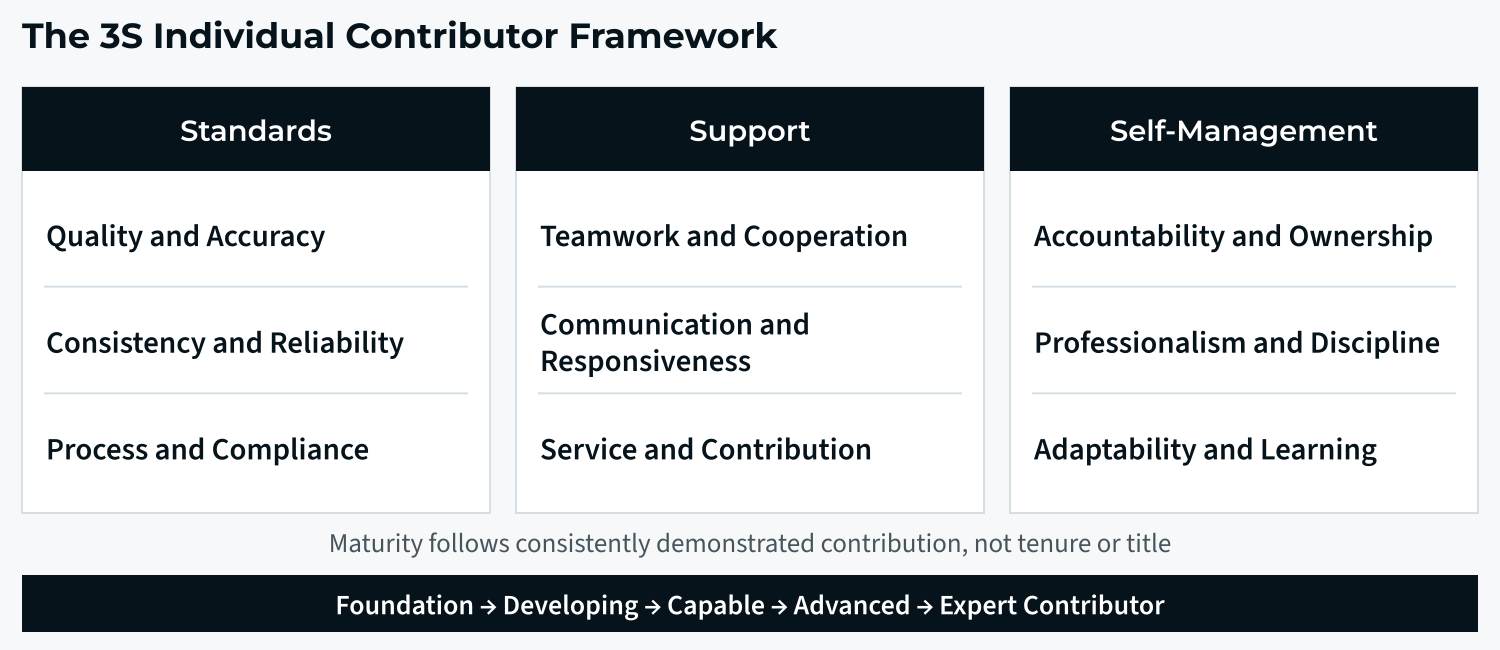
Discover, Diagnose, Design, Deliver and Review organise this practitioner suite. They do not replace the three 3S pillars. The diagnostic manual rates organisational development practices on a separate four-level scale; it does not score an employee.
Explore the interactive frameworkRead & diagnose
The 109-page DIR-2.0 manual retains exact group instruments and evidence rules. The 131-page ebook explores technical depth, influence, mentoring and specialist careers; the long read questions the promotion assumption.
Ebook
A 131-page companion on technical depth, workplace effectiveness, influence, mentoring and specialist career routes.
View PDF
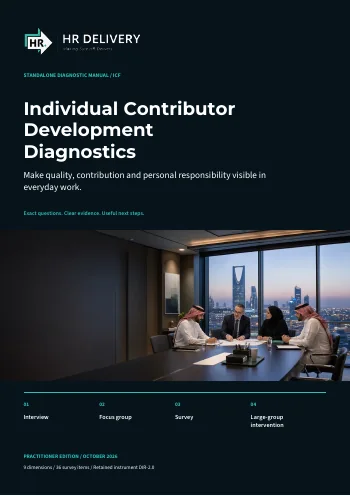
Diagnostic manual
The 109-page DIR-2.0 source manual: nine dimensions, retained group instruments and organisational-practice evidence rules.
View PDF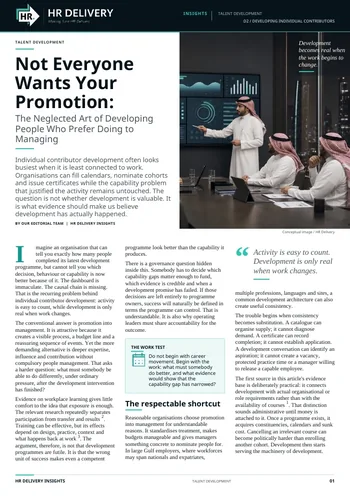
Long-read article
Explore the value of expert-contributor careers without assuming management is the only route.
View PDFShort insights
Related assessments
These existing assessments may add a relevant, consented perspective. Interpret them with work evidence and the approved role standard; a score alone cannot set an individual stage or career decision.
A possible technical evidence source, interpreted against the approved role requirement.
Browse this assessment groupA possible behavioural evidence lens when the relevant level and purpose are confirmed.
Browse this assessment groupCan inform practice support; it cannot establish a development need by itself.
Browse this assessment groupLearn & apply
Explore a focused one-day introduction or build wider professional capability through a related development programme.
A practical starting point
Agree the work standard, employee aspiration, source version and owner.
Separate skill evidence from access, feedback, clarity, time and process barriers.
Choose real assignments, mentoring and clear review evidence, not only courses.
Compare varied work samples with the baseline and record other changes that may explain the result.
Work with HR Delivery to turn the evidence and tools into a response suited to your organisation.
Continue the connection