

Ebook
Diagnosing Learning and Development Needs
A 130-page companion on task requirements, causes, learning responses, transfer and evaluation.
View PDFD1 / Talent development
Trace a training request through task evidence, rival causes, a proportionate response and workplace review. The 7A framework, diagnostic manual and 104 practical tools work together.
D1 / Training Needs Analysis Toolkit
Find out what work must improve, whether capability is the constraint and what else may be getting in the way. Use the toolkit to turn that judgement into an owned response with practice, manager support and a review of actual work.
For HR and learning practitioners, managers, OD teams and sponsors commissioning development.
Your working library
Explore the complete toolkit, then use the supporting document alongside the guides and examples.

Complete practitioner toolkit
The 230-page practitioner edition contains 104 distinct tool procedures, worked illustrations and an eight-page applied case. Discover the decision, diagnose work and causes, design a response, enable practice, then review what changed.
Open the complete toolkit112 pages / PDF
112 pages with 104 reusable records matched by tool identifier. Complete them with authorised local evidence after following the procedure in the main toolkit.
View supporting documentPDF resources are in English. Read on screen: Actual view on desktop and full width on mobile.
The thinking behind the tools
The HR Delivery 7A Training Needs Analysis Framework retains seven decisions: Align, Anticipate, Assess, Analyse, Agree, Activate and Assure. Four lenses locate evidence at enterprise, function/process, role/team and individual level.
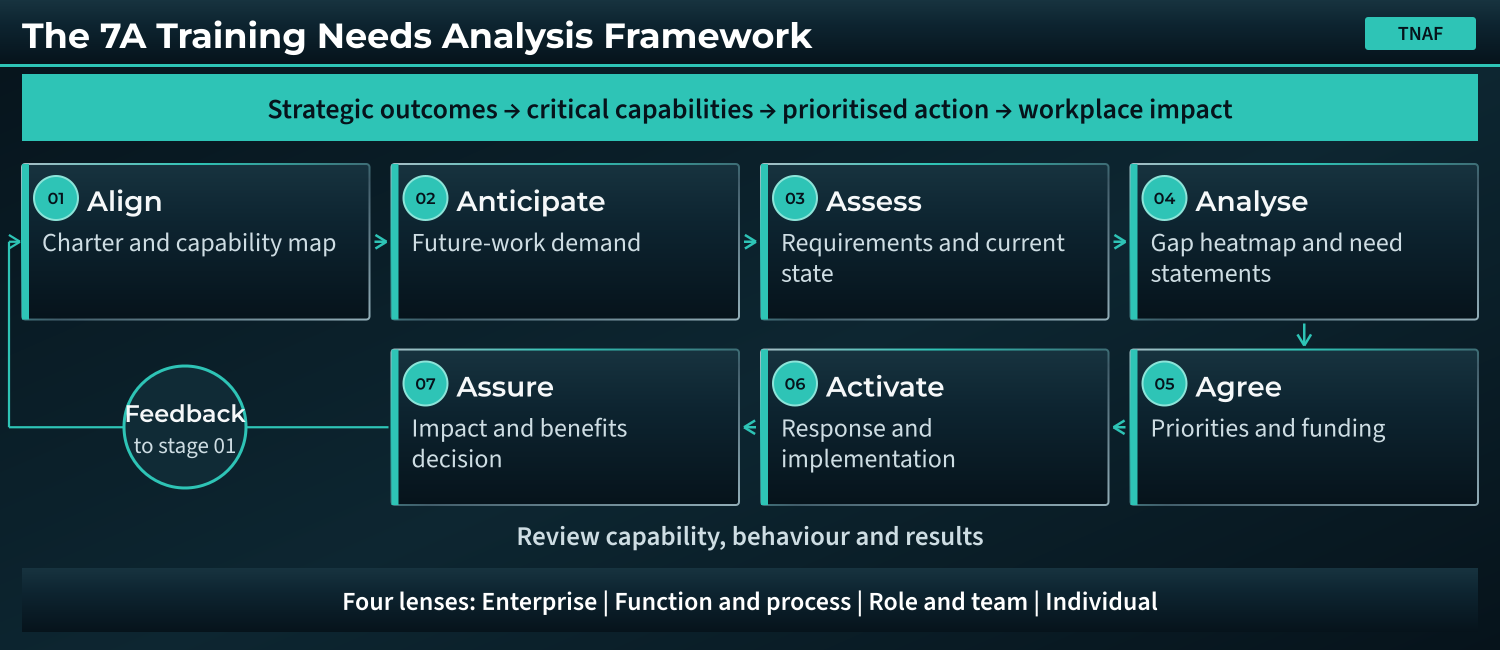
Discover, Diagnose, Design, Deliver and Review organise the practitioner toolkit. They are navigation headings; the seven decisions of the 7A framework remain the source method. Survey signals are separate from evidence-based practice-level judgements.
Explore the interactive frameworkRead & diagnose
The existing 95-page diagnostic retains the exact instruments and evidence rules. The 130-page ebook explains the learning questions in depth; the long read challenges the assumption that every gap needs a course.
Ebook
A 130-page companion on task requirements, causes, learning responses, transfer and evaluation.
View PDF
Diagnostic manual
The 95-page source manual: seven dimensions, retained interview, group and survey instruments, and exact evidence rules.
View PDF
Long-read article
Question whether a course request explains the work gap before deciding what response to buy.
View PDFShort insights
Related assessments
These published assessments can contribute evidence about an individual or team. Check the permitted purpose and interpret the result with task evidence; no assessment score alone establishes an organisational training need.
A possible individual evidence source when level-matched behaviours are relevant to the task.
Browse this assessment groupA possible source for technical capability evidence, interpreted against the approved role standard.
Browse this assessment groupMay inform how practice is supported; it does not prove that training is required.
Browse this assessment groupLearn & apply
Explore a focused one-day introduction or build wider professional capability through a related development programme.
One-day workshop · In-house
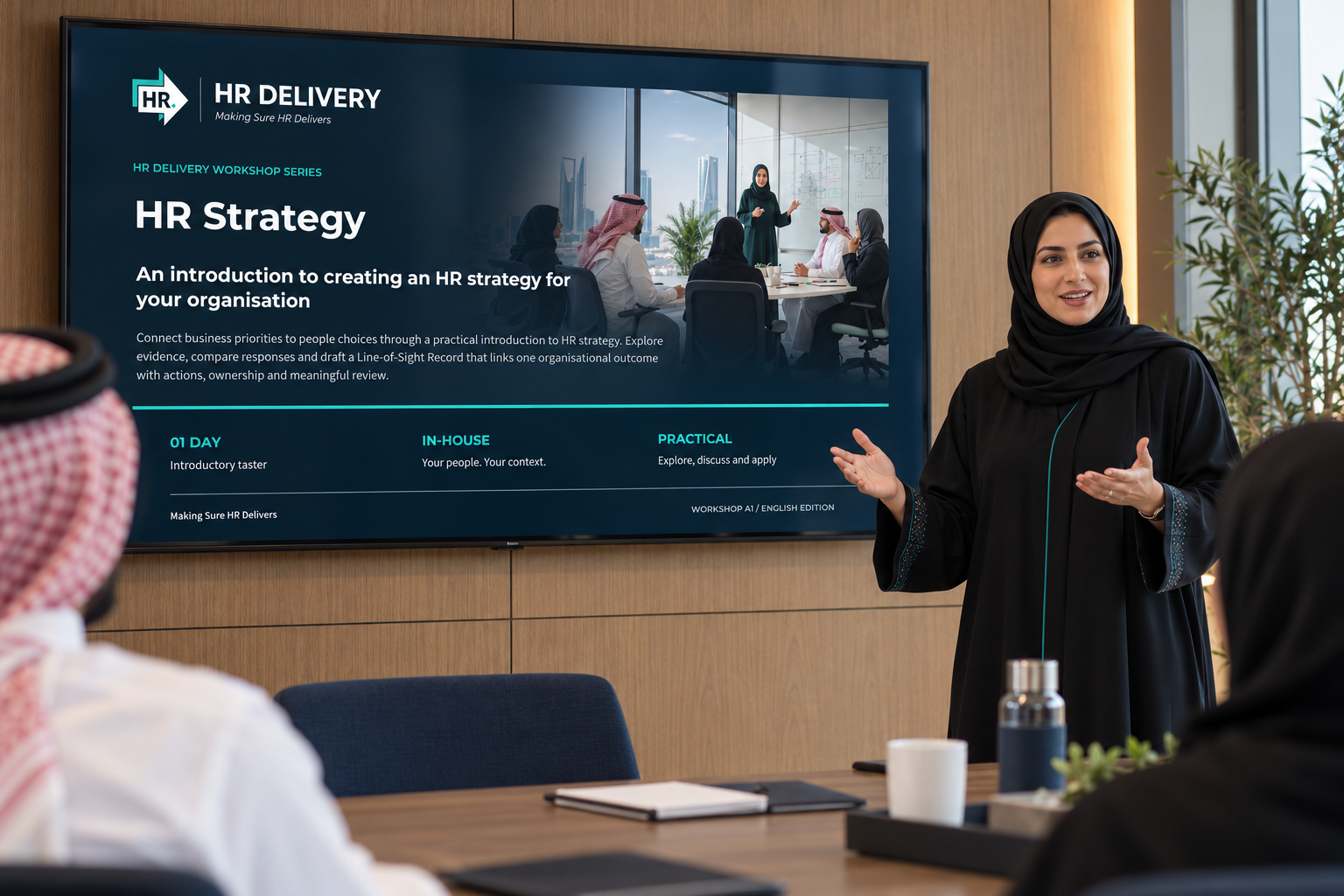
A one-day, in-house introduction to the 7A method, evidence and practical development choices.
Related development programme
Build broader skill in diagnosing organisational needs and designing responses with the people affected.
Explore the programmeA practical starting point
Agree the outcome, task standard, affected population and decision owner.
Use the diagnostic, observations and records to compare capability with workflow, tools, clarity and capacity.
Commission learning only where its mechanism fits; assign other barriers to the right owner.
Check practice in real work, compare with the baseline and record alternative explanations.
Work with HR Delivery to turn the evidence and tools into a response suited to your organisation.
Continue the connection