

HRSFEnglish manual
HR Strategy Diagnostic Manual
Connect business goals with people priorities, HR initiatives and clear measures of progress.
DIAGNOSTIC TOOLS
Explore 29 subject manuals across seven framework areas, plus four practical guides to diagnostic methods. Turn organisational questions into evidence and focused action.
EVIDENCE BEFORE ACTION
Effective change starts with understanding what is happening and why. Our diagnostic tools help you listen, examine evidence and identify the underlying issues, so the response addresses the real need.
Understand your context, goals and the questions that matter.
Gather evidence, identify causes and make sense of the findings.
Build a practical response around the agreed priorities.
Implement the agreed actions with clear ownership.
Evaluate the impact, learn and refine the next steps.
BEFORE DESIGN & DELIVERY
Diagnostic feedback is a key step. We discuss the results with your team, check their meaning and agree priorities before designing or implementing solutions. A shared understanding gives action a clear purpose.
THE DIAGNOSTIC LIBRARY
Find the manual that fits your question. Each collection connects directly to an area of the HR Delivery framework model.
Choose an area of the model to focus the library, or browse all 29 manuals below.
Showing all 29 manuals across 7 areas
Read the complete manuals in the on-page viewer.
The roof · Set the direction
Agree where the organisation is going, the workforce it needs and how HR will support it.
Connect business goals with people priorities, HR initiatives and clear measures of progress.
Plan the roles, skills and capacity needed as the organisation changes.
Clarify what HR needs to provide and the capabilities required to deliver it well.
Pillar one · Bring people in and help them stay
Create a clear employment offer, attract the right talent and give people good reasons to stay.
Align what you promise employees with what they experience at work.
Focus attraction efforts on the people and capabilities your organisation needs.
Help new colleagues settle in, understand their role and build the relationships and confidence they need to contribute.
Understand why people stay or leave and focus action where it will help most.
Pillar two · Make the organisation work
Understand how the organisation works, shape clear roles and structures, and help people navigate change.
Explore eight organisational dimensions and 74 diagnostic statements to turn evidence into focused action.
Use clear expectations and consistent evidence to identify strengths and development needs.
Help people understand change, prepare for it and put new ways of working into practice.
Align structure, roles, decisions and workflows with what the organisation needs to achieve.
Make the behaviours, skills and capabilities needed for effective work clear.
Support consistent decisions about the responsibilities, demands and value of different roles.
Pillar three · Help people grow
Build the skills, behaviours and confidence people need today, and prepare them for what comes next.
Identify learning needs and prioritise development that supports real work.
Use Standards, Support and Self-Management to build effective everyday contribution through nine competencies.
Bring Direction, Development and Delivery to life through the 3D9C model and its nine leadership competencies.
Explore seven connected practices, workstyles and team contribution to strengthen how people work together.
Make career options visible and turn aspirations into practical development steps.
Support growth through purposeful conversations, guidance and shared learning.
Prepare people for critical roles and focus development on future readiness.
Pillar four · Create a healthy working experience
Listen to people and understand the conditions that help them feel connected, supported and able to contribute.
Understand engagement outcomes and their drivers, then turn employee feedback into accountable action.
Connect ten wellbeing areas and six strategic enablers with practical, prevention-led action.
Understand employees’ experience and focus improvements on the issues that matter to them.
Explore Environment, Expectations and Execution through 12 diagnostic dimensions and practical action planning.
Pillar five · Enable and recognise contribution
Set meaningful expectations, support progress and recognise the contribution people make.
Connect meaningful goals, regular feedback, fair evaluation and development.
Connect pay, recognition and reward with contribution and organisational priorities.
The foundation · Deliver, learn and improve
Support every area with effective HR services, useful evidence and thoughtful use of AI.
Use the experience of HR service users to identify where service can improve.
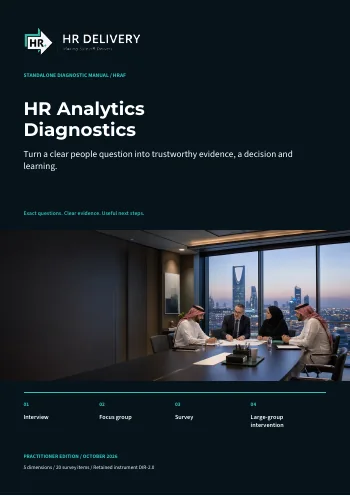
Turn people and service data into useful insights for decisions and improvement.
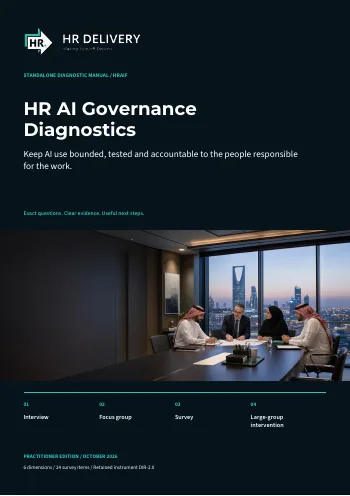
Consider where AI can support HR work, with clear purpose and human judgement.
Try a different search term or choose another framework area.
THE DIAGNOSTIC METHODS
Start with the question, then choose the approach. These complete guides take you through planning, delivery and interpretation for interviews, surveys, focus groups and large-scale interventions.
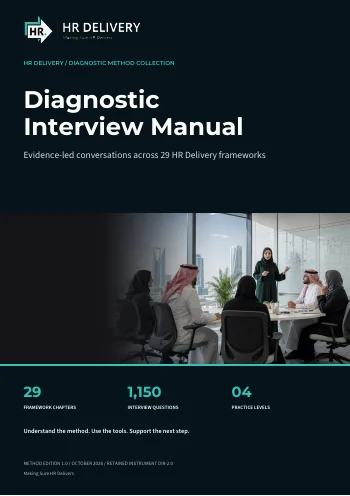
Plan, conduct and analyse evidence-led interviews across 29 HR subject areas. Includes 1,150 questions, briefing scripts, behavioural rating guides and practical next-step actions to turn individual accounts into traceable organisational findings.
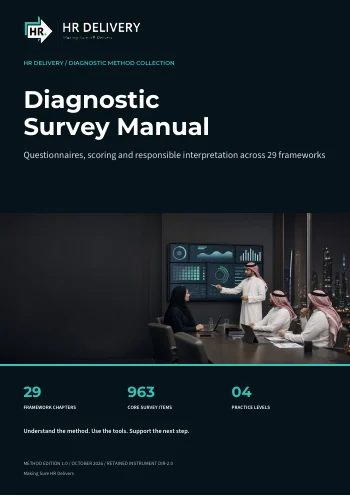
Administer and interpret diagnostic surveys across 29 HR subject areas using 963 core items. Includes complete questionnaire forms, scoring keys, data-quality checks and reporting guidance to identify patterns and guide further enquiry.
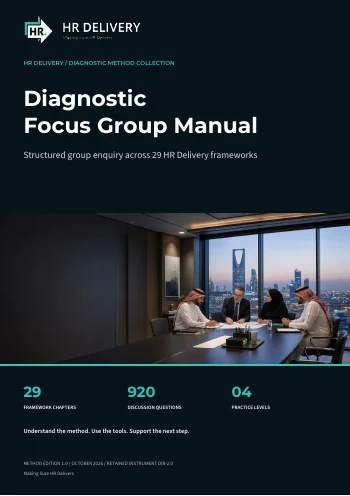
Facilitate structured discussions across 29 HR subject areas with 920 questions. Includes guidance on group composition, inclusive participation, private ratings and thematic analysis to explore different experiences and inform practical follow-up.
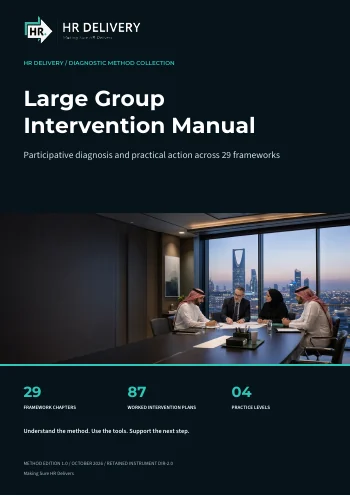
Design participative diagnosis and action workshops across 29 HR subject areas. Includes 87 worked intervention plans, facilitation methods, running orders and capture sheets to connect perspectives, record evidence and support accountable follow-through.